Soil moisture-precipitation coupling is a key aspect of land-atmosphere interactions. However, there are substantial disagreements among different climate models in simulating the strength of this coupling, and the underlying physical pathways—specifically, whether soil moisture affects precipitation through surface sensible heat (SH) or evapotranspiration (ET)—remain unclear. To address these questions, the research group led by Professor Yang Kun from the Department of Earth System Science (DESS) at Tsinghua University revealed the global hotspots of strong causality in surface soil moisture-precipitation (SSM-P) coupling and their associated pathways. This understanding was then applied to evaluate the performance of mainstream climate models in simulating land-atmosphere coupling.
The research team conducted causal analysis using both satellite remote sensing data and reanalysis data. The results consistently indicated that approximately 16% of the global land area exhibits strong local impacts of soil moisture on precipitation. Strong coupling tends to occur in regions with large soil moisture variability, encompassing eight coupling hotspots: the western Tibetan Plateau (WTP), North India (NI), the Iranian Plateau (IP), the Sahel region (SR), the Greater Horn of Africa (GHA), tropical Africa (TA), the Pacific coast of Mexico (PCM), and North Brazil (NB) (Figure 1). Through lagged causality analysis, it was found that the influence of surface soil moisture on precipitation can persist on weather to sub-seasonal timescales, though with notable regional differences. The influence duration is shortest in North India and the western Tibetan Plateau, and longest in North Brazil and the Iranian Plateau.
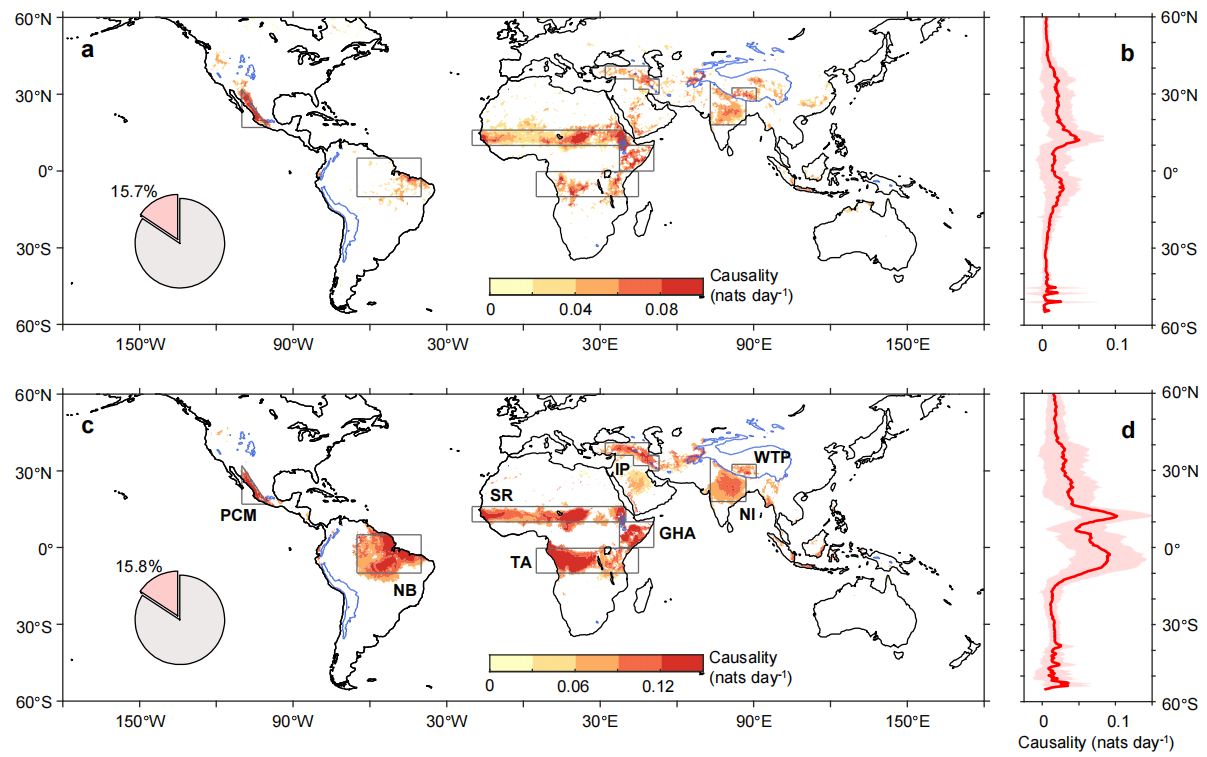
Figure 1 Strong SSM-P causality reflected by satellite observations and reanalysis data.
The study further analyzed the sub-processes involved in SSM-P coupling. The results show that this coupling is more constrained by atmospheric components (ET→P and SH→P) than by land surface components (SSM→ET and SSM→SH) (Figure 2a). Notably, the SSM-P coupling exhibits distinctly different processes across these eight hotspots: in North India, which has abundant external moisture, the coupling is primarily achieved through the SSM→SH→P pathway, while the SSM→ET→P pathway plays a weaker role; in the relatively drier Greater Horn of Africa and tropical Africa, where boundary layer height is relatively stable, the SSM→ET→P pathway dominates, and SSM→SH→P rarely occurs; in the remaining five hotspots, both pathways contribute substantially (Figure 2b). Consequently, these pathway differences are closely linked to the strength of external moisture transport and the stability of boundary layer height (Figures 2c-d).
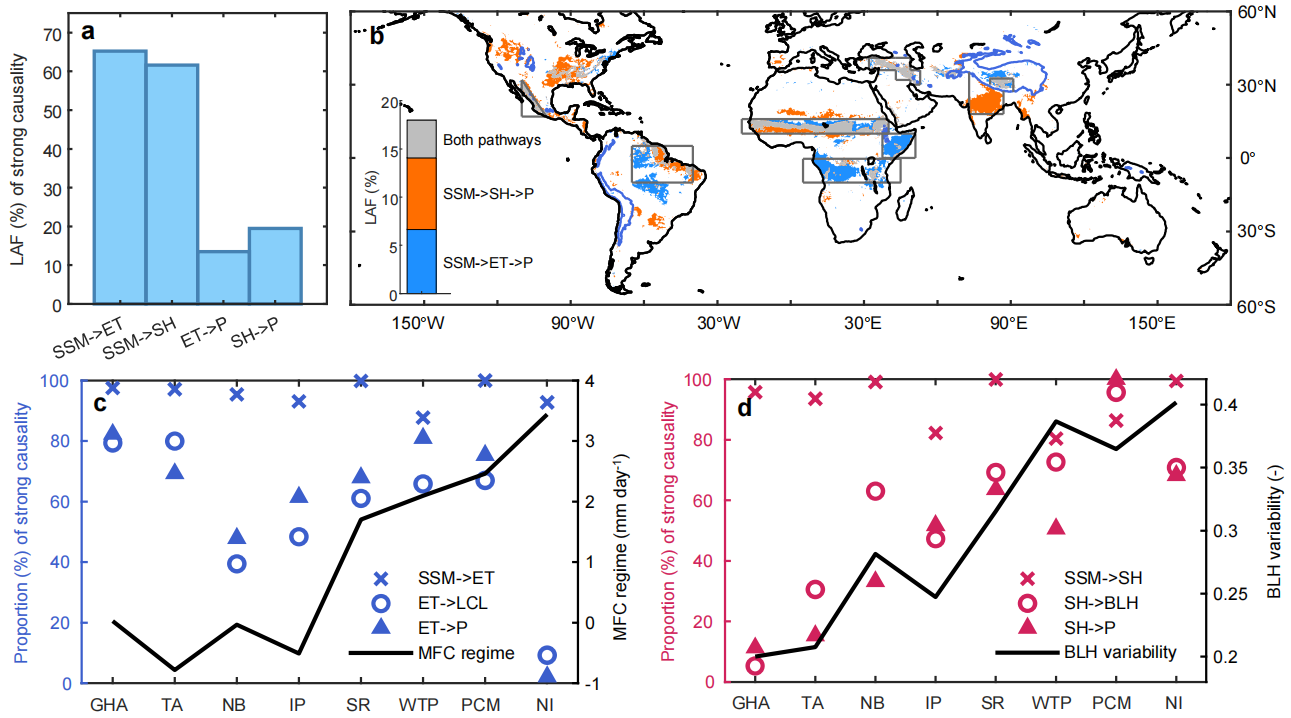
Figure 2 Strong causality of sub-processes by which surface soil moisture affects precipitation.
Based on the process-level coupling characteristics revealed above, the study evaluated the performance of CMIP6 climate models. The results indicate that most models fail to reproduce the SSM-P coupling hotspots, and the sub-processes responsible for poor model performance vary by region (Figures 3a-e). Among them, four better-performing models successfully capture 4 to 5 hotspots and also reproduce the strong soil moisture variability-strong causality relationship found in ERA5, whereas other models cannot (Figures 3f-g). Therefore, a climate model's ability to represent the relationship between soil moisture variability and SSM-P causality can serve as a metric for evaluating whether the model can reasonably capture land-atmosphere coupling.
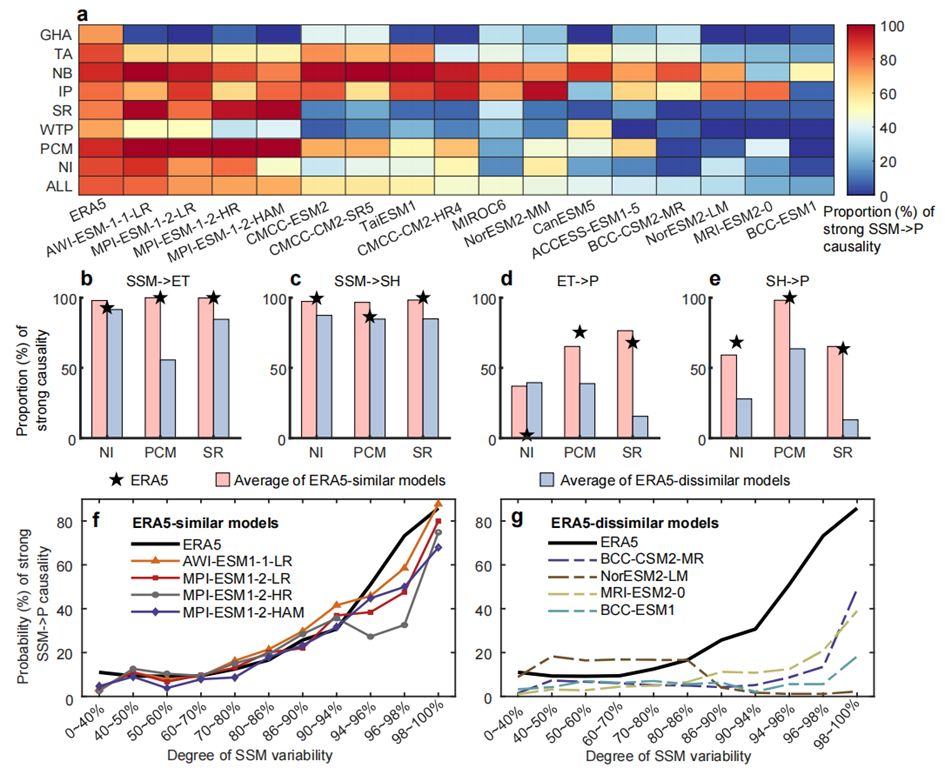
Figure 3 Evaluation and diagnosis of SSM-P causality simulated by CMIP6 climate models, with ERA5 results as a reference.
The study provides process-level insights into land-atmosphere coupling and offers new metrics for evaluating and diagnosing the fidelity of climate models in representing this coupling, contributing to model development and climate prediction/projection. The relevant research findings were published online in Nature Communications on October 8, 2025, under the title "Causal pathways underlying global soil moisture-precipitation coupling." Sun Jing, a postdoctoral fellow from Tsinghua DESS, is the first author, and Professor Yang Kun is the corresponding author. Co-authors include Assistant Professor He Xiaogang from the National University of Singapore, Professor Wang Guiling from the University of Connecticut, Professor Wang Yong from Fudan University, Assistant Professor Yu Yan from Peking University, and Professor Lu Hui from Tsinghua DESS. The research was supported by the National Natural Science Foundation of China, the China Postdoctoral Science Foundation, the International Partnership Program of the Chinese Academy of Sciences, Tsinghua University's "Shuimu Tsinghua Scholar" Program, and other grants.
Ful text link: https://doi.org/10.1038/s41467-025-63999-7
Written by Sun Jing and Yang Kun
Edited by Wang Jiayin
Reviewed by Geng Rui



 Picture News
 Hot News