Against the backdrops of climate change, large-scale extreme wildfires are becoming more frequent, with profound consequences for the global carbon cycle, ecosystems, air quality, and public health. Accurately and swiftly assessing the air pollution and health risks associated with these events is crucial for improving wildfire monitoring and early warning systems, and for safeguarding population health. While wildfire smoke can travel vast distances via atmospheric circulation, previous research—limited by methodological and data constraints—has largely focused on the regional impacts of specific fire events, lacking effective tools to evaluate the global-scale pollution and health burdens posed by large-scale wildfires.
To address this critical gap, Professor Zhang Qiang’s research group from the Department of Earth System Science (DESS) at Tsinghua University, in collaboration with domestic and international partners, built upon their long-term research foundation and the independently developed near-real-time atmospheric composition tracking platform (Tracking Air Pollution, TAP). They developed an innovative near-real-time inversion technique and dataset for global wildfire-related PM₂.₅ pollution by integrating multi-source data. This breakthrough enabled them to quantify the global impacts of long-range wildfire smoke transport and assess the contribution of the 2023 Canadian extreme wildfires to global PM₂.₅ exposure and associated health risks.
The study first employed high-resolution global wildfire emission inventories to drive the GEOS-Chem atmospheric chemical transport model, simulating the relative contribution of wildfire emissions to global daily PM₂.₅ concentrations. By integrating ground-based observations, reanalysis data, satellite retrievals, and wildfire emission inventories, the team constructed a three-tier machine learning model based on a random forest algorithm, the Synthetic Minority Over-sampling Technique (SMOTE), and a residual correction module. This approach enabled the inversion of global daily PM₂.₅ concentrations at a 10 km resolution, alongside the specific contribution of wildfires. Through operational data processing, online numerical simulations, and rolling model training, they achieved synchronous, near-real-time tracking of both total and wildfire-induced PM₂.₅ concentrations globally. Sensitivity experiments with the GEOS-Chem model further quantified the contribution of the 2023 Canadian wildfires to global PM₂.₅ levels. The resulting near-real-time dataset of global wildfire-related PM₂.₅ concentrations is publicly accessible via the TAP platform (http://tapdata.org.cn), covering daily data from 2023 to the present with a time lag of approximately three days (Figure 1).
标题图 Title image
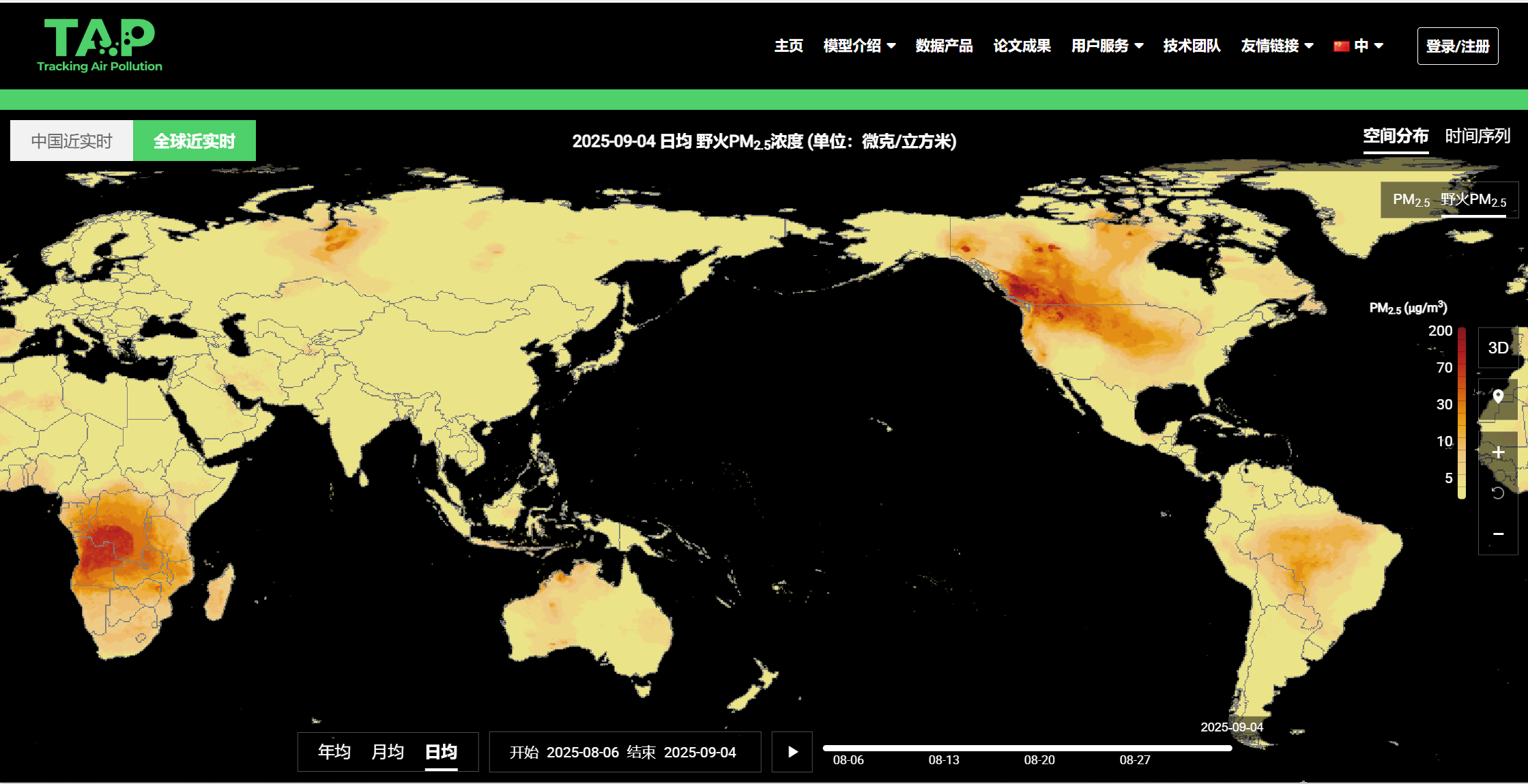
Figure 1: Near-real-time inversion data of global wildfire PM₂.₅ concentrations provided by the TAP platform (http://tapdata.org.cn)
The study revealed that the 2023 Canadian extreme wildfires raised the global population-weighted annual average PM₂.₅ exposure by 0.17 μg/m³. The impact was most pronounced in North America and Europe, with smaller and statistically insignificant effects elsewhere. In North America, smoke blanketed most of the continent except the region west of the Rocky Mountains (Figure 2). Wildfire pollution increased annual average PM₂.₅ exposure by 3.83 μg/m³ in Canada and 1.49 μg/m³ in the United States, accounting for 40% and 17% of total annual exposure, respectively. In the U.S., 187 million people experienced Canadian wildfire-related PM₂.₅ exposure exceeding 1 μg/m³, with the Rocky Mountains, Midwest, Ohio Valley, and Northeast most affected. In June 2023, a low-pressure system off eastern Canada combined with a high-pressure ridge to its west funneled smoke from eastern Canadian fires into densely populated areas of the eastern U.S., triggering two major pollution events. During these episodes, daily per capita PM₂.₅ exposure in the U.S. peaked above 30 μg/m³ (Figure 3). Meanwhile, westerly winds carried Canadian smoke across the North Atlantic to Europe on multiple occasions in 2023, increasing the annual average PM₂.₅ exposure of the European population by 0.41 μg/m³.
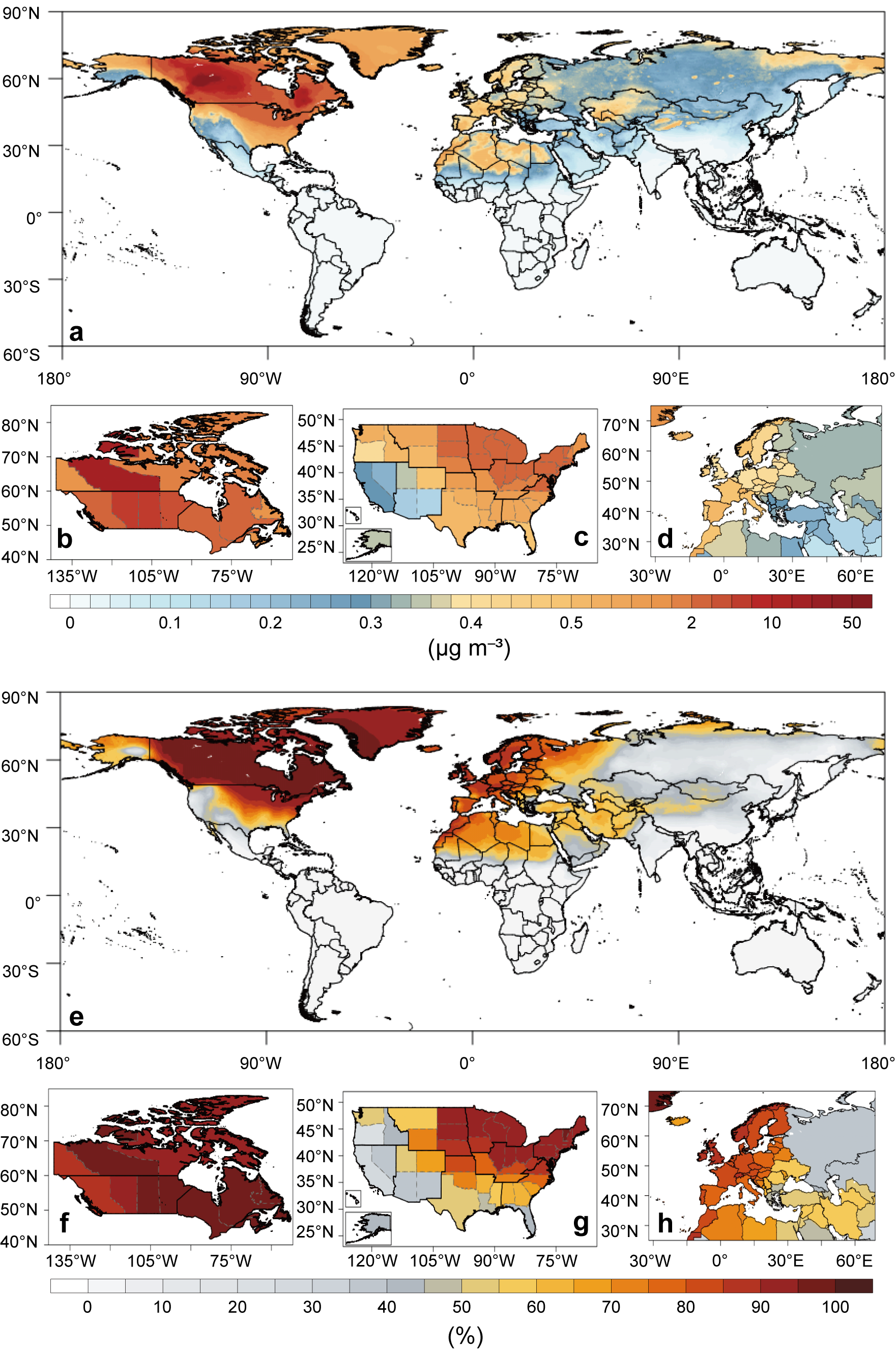
Figure 2: Annual average PM₂.₅ pollution exposure attributable to the 2023 Canadian extreme wildfires
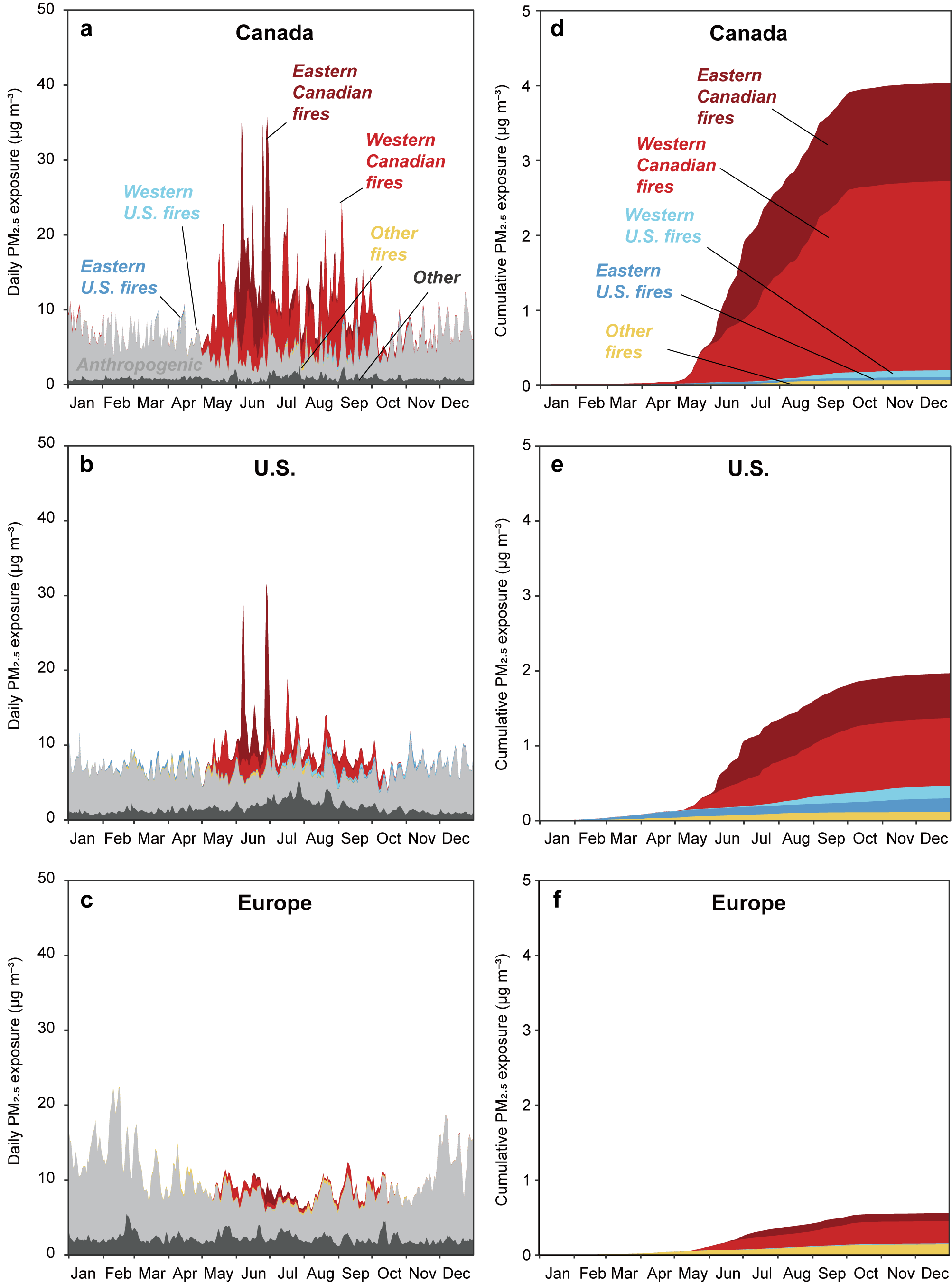
Figure 3: Daily PM₂.₅ pollution exposure levels and source contributions for populations in Canada, the United States, and Europe in 2023
To assess the health impacts, the study defined “Canadian wildfire pollution days” as days when the daily average PM₂.₅ concentration exceeded 15 μg/m³ (the World Health Organization guideline) and more than 50% of that pollution originated from Canadian wildfires. Based on this metric, 354 million people worldwide experienced at least one such day in 2023. On average, Canadians faced 27 days of local wildfire pollution, while Americans experienced 14 days of exposure to transported Canadian wildfire smoke. Applying exposure-response functions, the study estimates that 5,400 acute deaths in North America and 64,300 chronic deaths in North America and Europe were attributable to PM2.5 exposure to the 2023 Canadian wildfires.
The research findings significantly advance our ability to characterize and assess global wildfire-related air pollution exposure and associated health risks. The near-real-time inversion technology and dataset developed here offer scientific tools and data support for further studies in this field. The findings underscore the substantial impacts of extreme wildfire events on global air quality and public health. As wildfire frequency and intensity continue to rise in mid-to-high latitudes of the Northern Hemisphere, this work provides critical scientific evidence for understanding the environmental and health consequences of such events.
The related paper, titled “Long-range PM₂.₅ pollution and health impacts from the 2023 Canadian wildfires,” was published online in Nature on September 10. Following the team’s 2023 publication in Science on changes and drivers of wildfire carbon emissions in Northern Hemisphere mid-to-high latitudes, this study represents another major achievement in the field of global extreme wildfire emissions and their climate-environmental effects.
Professor Zhang Qiang from Tsinghua DESS, Wang Yuexuanzi (a 2022 doctoral student from DESS), and Dr. Xiao Qingyang (Assistant Researcher, School of Environment) are the co-first authors, with Professor Zhang Qiang as the corresponding author. Co-authors include Associate Researcher Geng Guannan, Engineer Liu Xiaodong, PhD graduate Liu Jiajun, and Academician He Kebin from Tsinghua’s School of Environment; Professor Steven Davis from the Department of Earth System Science, Stanford University; doctoral students Yang Jin and He Changpei, and Associate Professor Huang Wenyu from Tsinghua DESS; Dr. Luo Binhe from the State Key Laboratory of Earth Surface Processes and Disaster Risk Reduction, Beijing Normal University; Professor Randall Martin from the Department of Energy, Environmental, and Chemical Engineering, Washington University in St. Louis; Professor Michael Brauer from the School of Population and Public Health, University of British Columbia; and Professor James Randerson from the Department of Earth System Science, University of California, Irvine. The research was supported by the Innovative Research Group Project (Class A) and Young Scientists Fund Project (Class B) of the National Natural Science Foundation of China, as well as the Xplorer Prize from the New Cornerstone Science Foundation.
Full Text Link: https://www.nature.com/articles/s41586-025-09482-1
Related Results: https://pubs.acs.org/doi/full/10.1021/acs.est.1c01863
https://www.science.org/doi/10.1126/science.ade0805



 Picture News
 Hot News