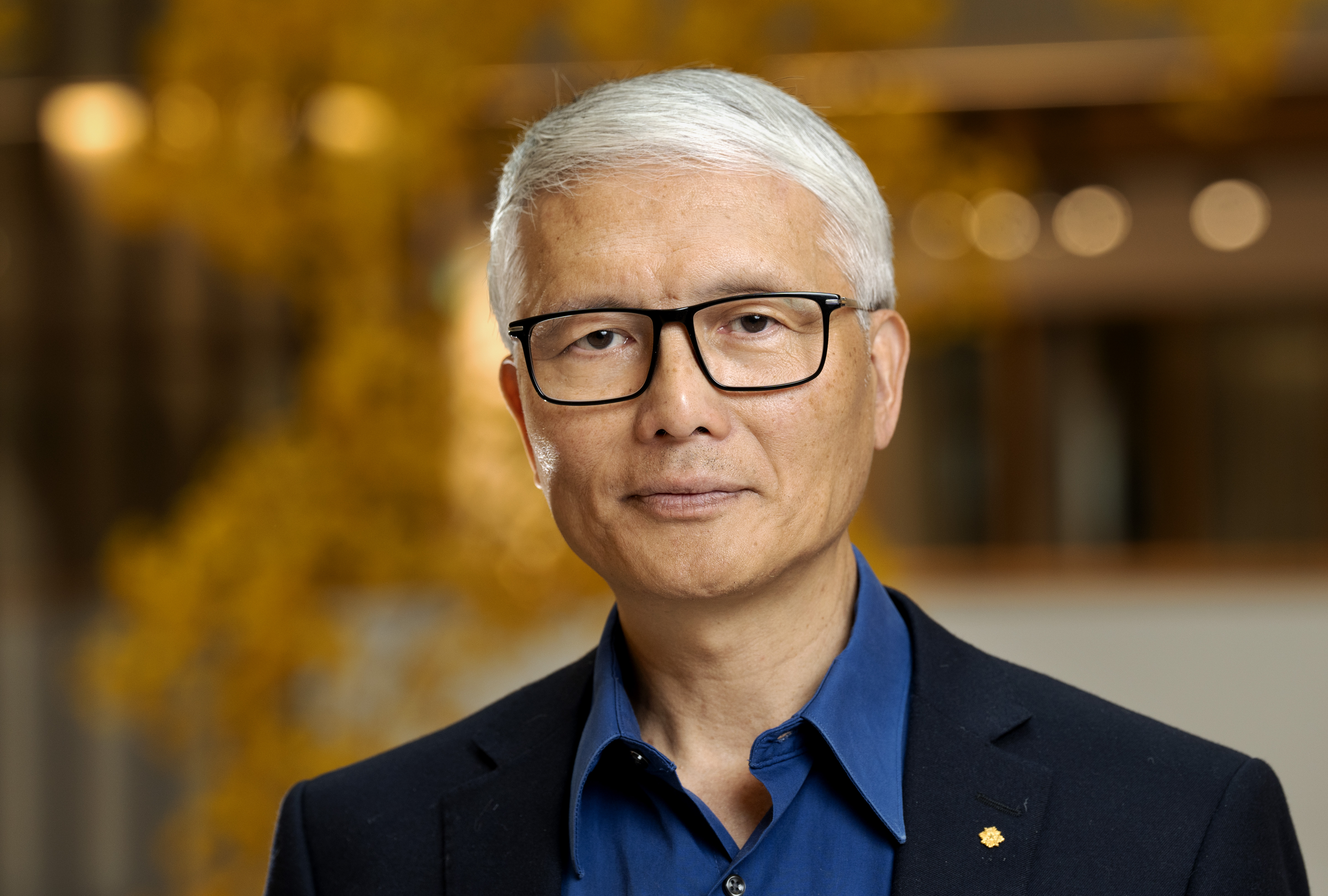
On April 24, 2026, the annual academic conference and academic committee meeting of the Key Laboratory of Earth System Numerical Simulation of the Ministry of Education (hereinafter referred to as the Laboratory) convened in Beijing.
Present at the event were academic committee members including Academicians Ding Yihui, Chen Dake, Huang Jianping, Qian Depei, Shen Xueshun and Chen Jingming, Research Fellows Qiao Fangli and Wang Bin, as well as Professors Jiang Kejun, Luo Yong and Yang Guangwen. Invited experts covered Academician Zhang Qiang, Professors Fei Jianfang, Hu Yongyun, Li Manchun, Min Jinzhong, Yang Kun and Zhu Hong, and Research Fellow Liu Hailong. The event was presided over by Academician Shen Xueshun, Professor Lu Hui, Deputy Director of the Department of Earth System Science (DESS), Tsinghua University, and Associate Professor Li Wei.
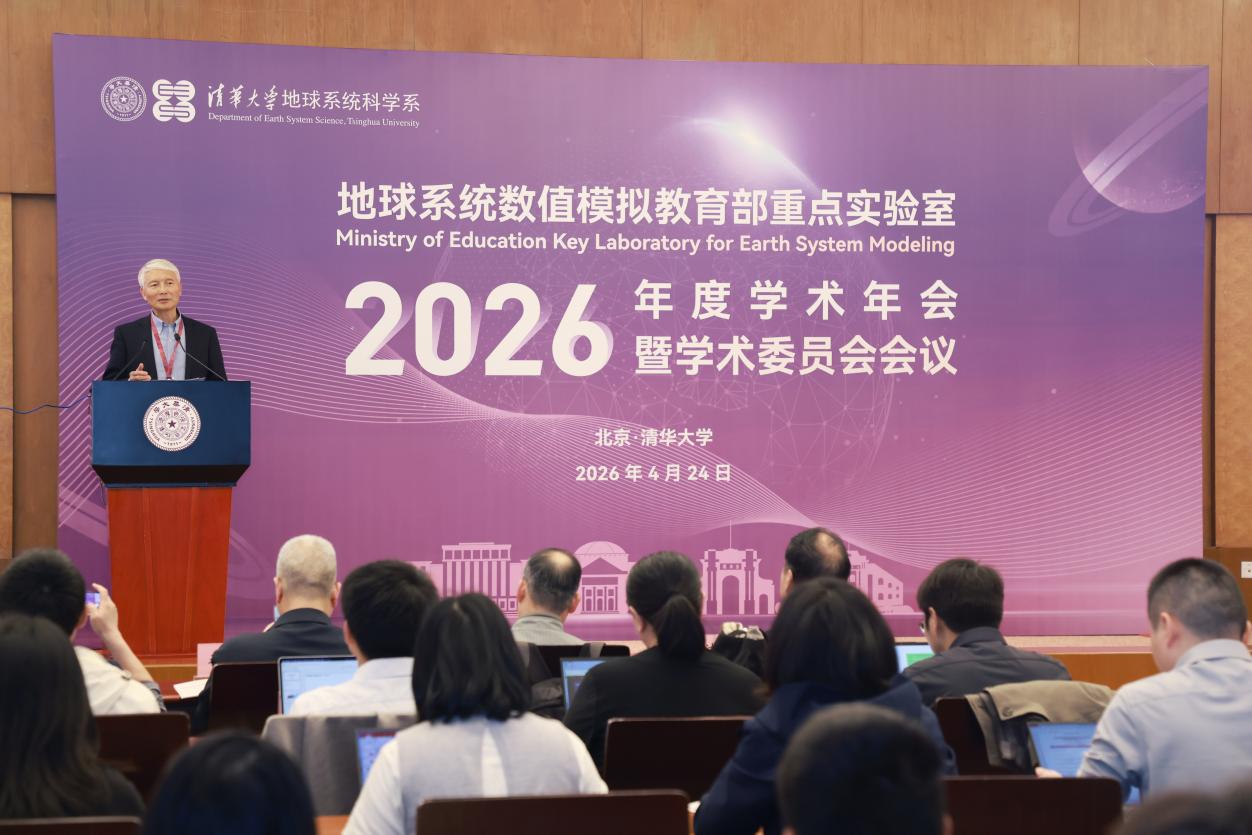
Chen Deliang delivers an address.
In his speech, Academician Chen Deliang, Chair of Tsinghua DESS, stated that the Laboratory has yielded fruitful achievements across diverse research fields over more than a decade of construction and development.
As the starting year of the 15th Five-Year Plan period, this year places the Laboratory at a pivotal stage to build on its solid foundation and strive for new breakthroughs. Going forward, it will fully embrace prevailing opportunities, commit to fostering high-caliber innovative talents, broaden international exchanges and partnerships, advance Earth system science research, and pool wisdom and strength to meet major national strategic demands.
Professor Liu Li, Director of the Laboratory, presented the 2025 annual work report. He outlined the lab’s internationally influential accomplishments covering Earth system model development, extraction of novel observational data, breakthrough findings in Earth system processes, and practical policy applications for Earth system governance, alongside the application of these achievements to support national strategic demands. He also elaborated on the lab’s experience in boosting interdisciplinary integration, broadening exchanges and fostering a collaborative innovation ecosystem.
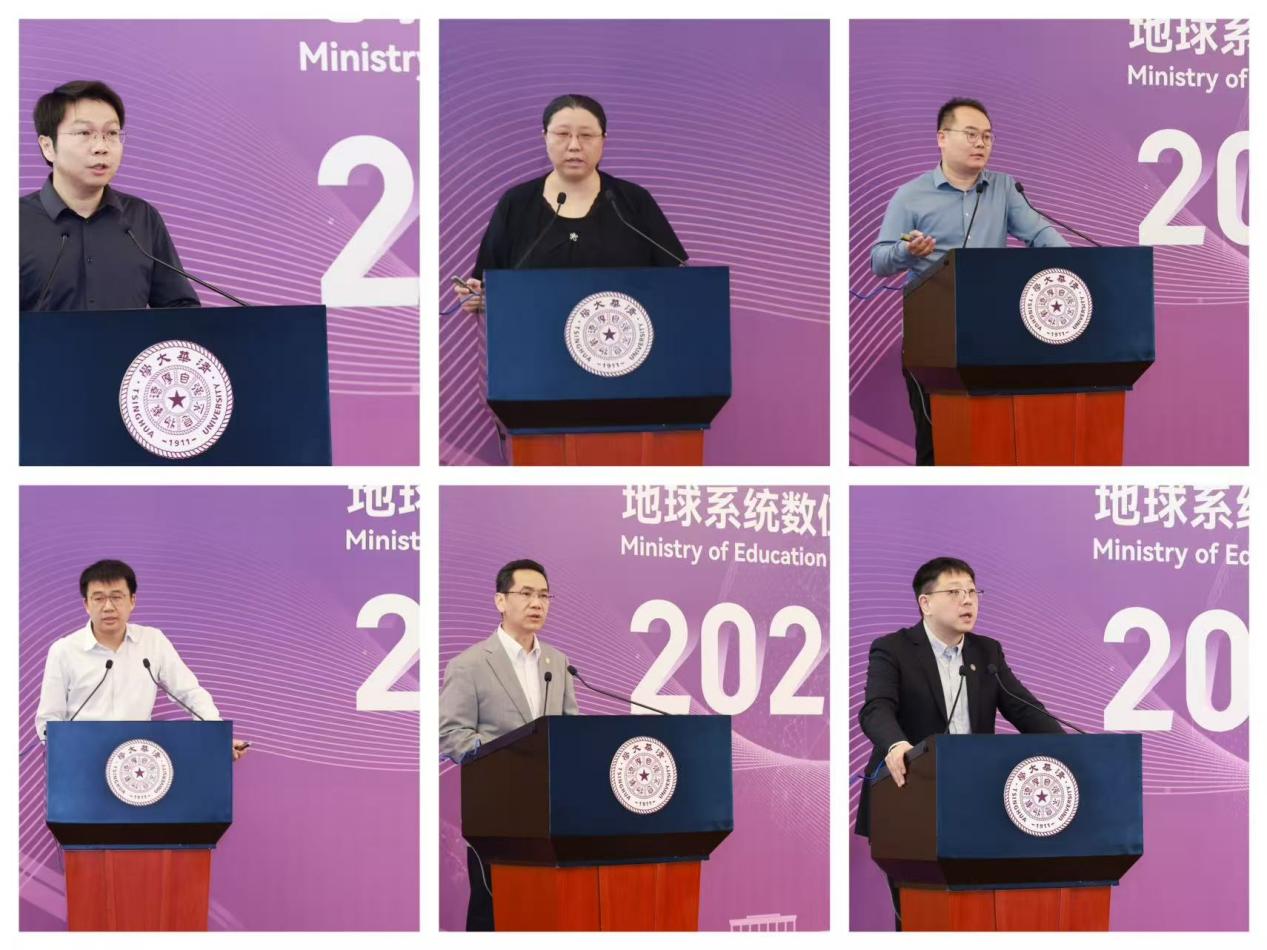
Laboratory members (from left to right, top to bottom) Liu Li, Peng Yiran, Li Wei, Xu Shiming, Lu Hui, and Guan Dabo present their reports.
Laboratory members Associate Professor Peng Yiran, Associate Professor Li Wei, Associate Professor Xu Shiming, Professor Lu Hui, and Professor Guan Dabo each presented their teams' recent research progress and the innovative achievements made by the Laboratory in areas such as the development of atmospheric, land surface, and sea ice models, and climate change impacts and responses.
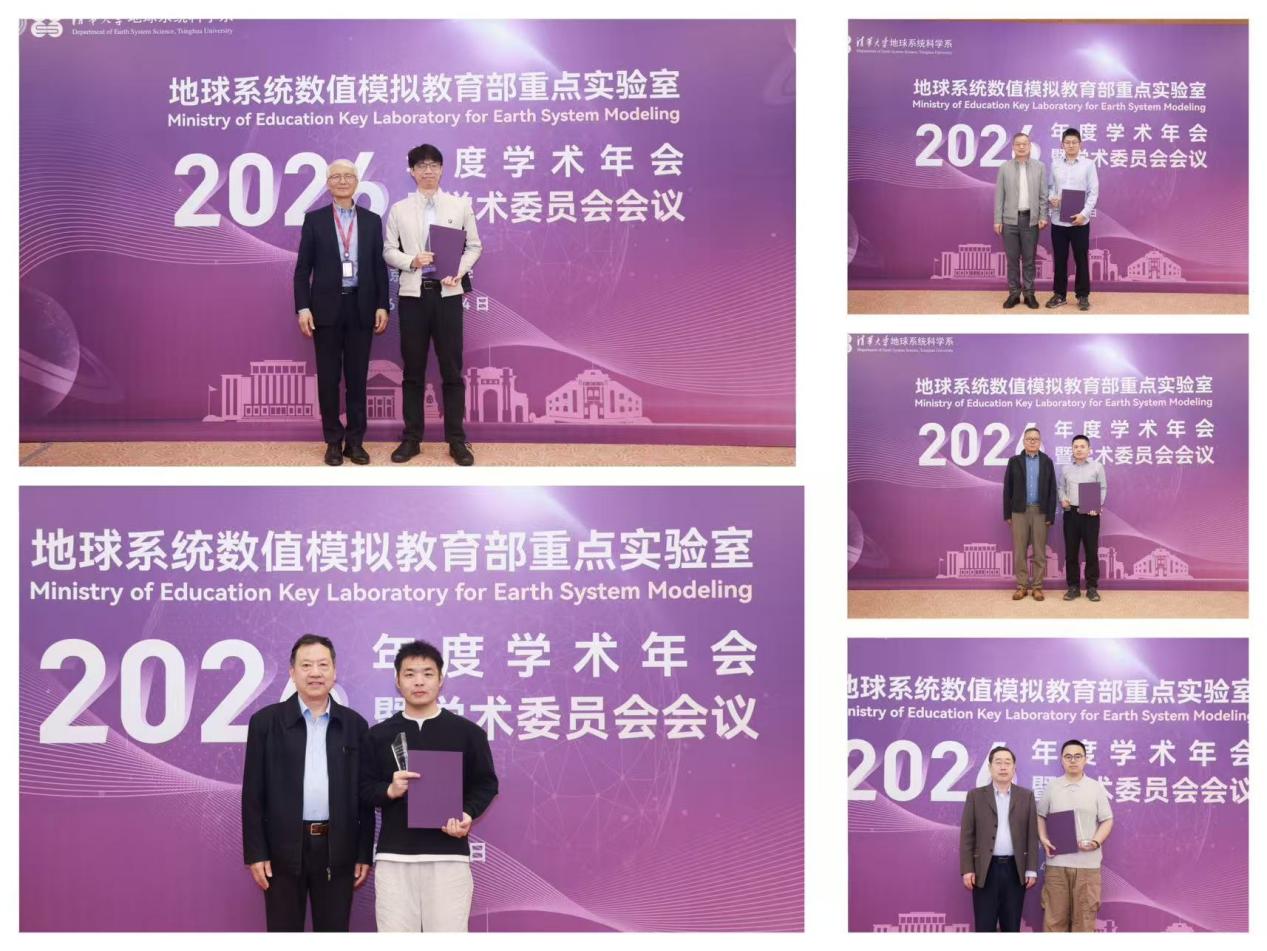
Awardees of the Inspur Award (from left to right, top to bottom): Jin Jianbing, Li Qingliang, Shen Lulu, Wang Xiang and Zhang Han.
The 14th awarding ceremony of Tsinghua-Inspur Computing Earth Science Youth Talent Award took place at the annual conference . Launched in 2012, the award has honored 69 outstanding young scholars so far. Dedicated to research across multiple disciplines, the recipients have grown into a key force advancing China’s Earth system science. Five awardees presented academic reports on their respective research fields.
The Conference also invited Professor D'Maris Coffman, Distinguished Visiting Professor at Tsinghua DESS and Associate Dean for Research of the Bartlett School of the Built Environment, University College London, to deliver a keynote speech entitled “Global climate governance after the SDGs”. Her research centers on multilateralism models in the post-SDG era amid evolving global cooperation dynamics.
To advance the development and application of the Community Integrated Earth System Model (CIESM), the Laboratory has launched an open research fund. At the Annual Conference, funded researchers of 2024 and 2025 presented project conclusion reports and initiation reports respectively.
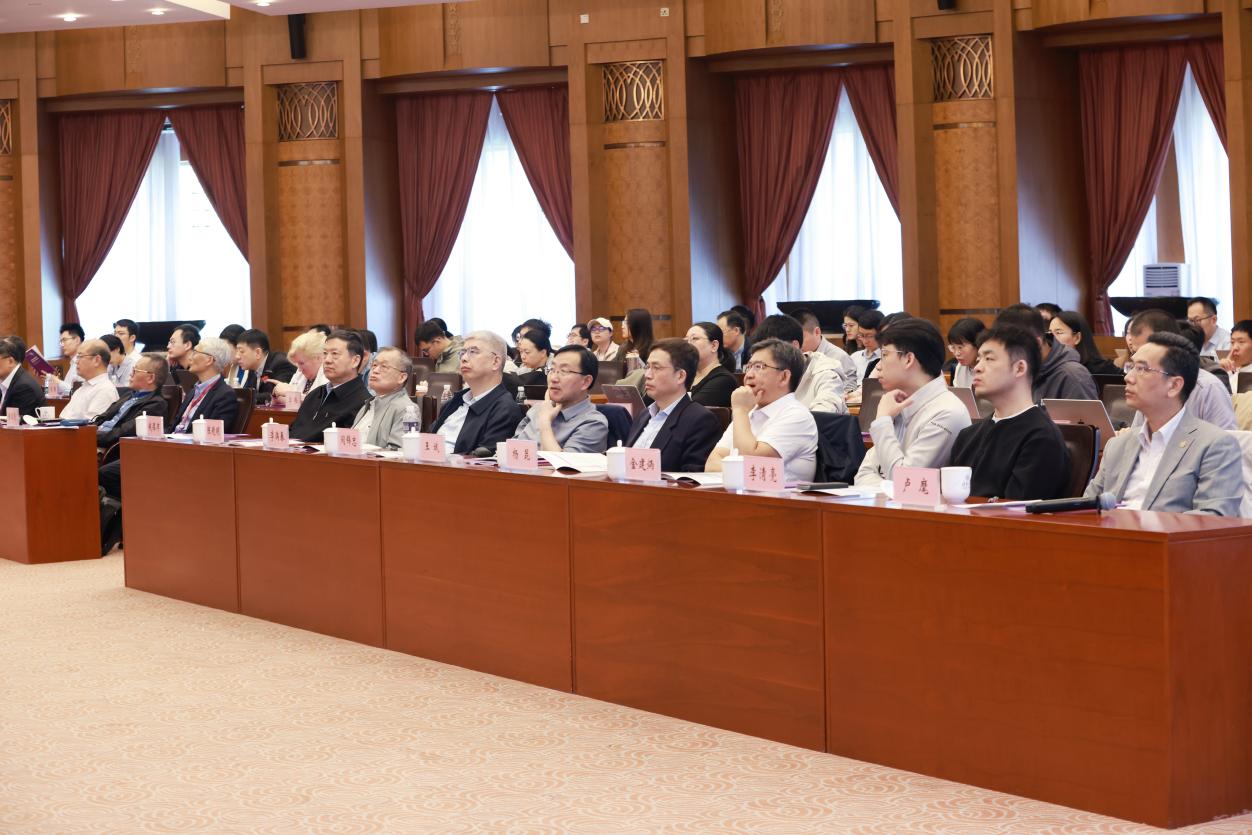
Conference in progress.
Members of the Academic Committee and invited experts recognized the Laboratory’s achievements. They encouraged the institution to uphold its interdisciplinary strengths, bolster independent innovation, and conduct application-driven research aligned with disciplinary frontiers and national demands.
Moving ahead, the laboratory will refine its research framework and deepen studies on Earth system science through the integration of computational science and artificial intelligence. Centering on pivotal topics including human activity-induced climate effects and sustainable development, it will pursue advances in cutting-edge science and fulfill its commitment to meeting major national strategic needs.
Written by Peng Yiran and Liu Li
Photo by Chang Zhidong
Edited by Wang Jiayin
Reviewed by Yu Le



 Picture News
 Hot News