Recently, the Sub-forum themed "Collaborative Innovation for Climate Change and Health Adaptation", jointly hosted by the Department of Earth System Science (DESS), Tsinghua University and The Lancet Countdown Asia Centre, was held during the 2026 Hong Kong Climate Week (HKCW 2026). The sub-forum, with a focus on the frontier challenges in the field of climate and health, brought together representatives from government, academia, enterprises and international organizations. Centering on key topics including climate adaptation indicators, regional experience, youth innovation and interdisciplinary governance, participants explored ways to build a resilient society for the coordinated development of climate and health.
Exploring Pathways for Climate and Health Adaptation from a Global Perspective
Scientific development of policies and indicators serves as the cornerstone of health adaptation actions. Liu Yang, Deputy Director-General of the Department of Climate Change Response, Ministry of Ecology and Environment, and Professor Gong Peng, Vice President of the University of Hong Kong and Co-Chair of The Lancet Countdown Global, delivered opening remarks respectively.
In the keynote presentation session, Dr. Marina Romanello, Executive Director of The Lancet Countdown Global Centre, shared how to leverage health and climate change indicators to trigger policy actions. Professor Zhang Ying, Co-Director of The Lancet Countdown Oceania Centre at the University of Sydney, systematically introduced Australia’s experience from policy formulation to practical implementation. Dr. Chow Pui Yi, Head of International and Relief Services at the Hong Kong Red Cross, discussed precautionary actions ahead of disease outbreaks and epidemics from the perspective of humanitarian relief.
Participating guests provided solid practical references for the implementation of climate and health adaptation from multiple dimensions including global monitoring, national policies and frontline rescue operations.
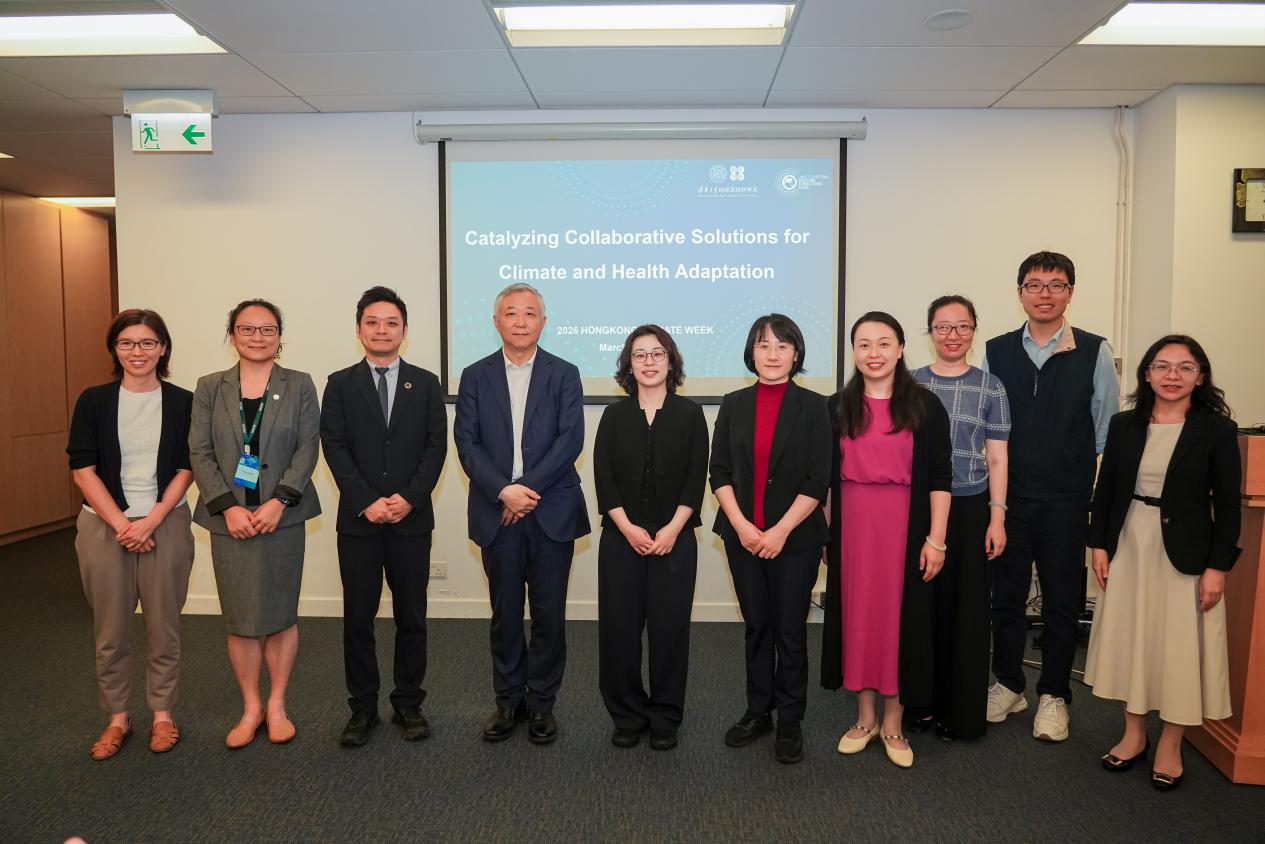
Group Photo of Participants
Empowering Youth to Drive Innovative Solutions
Youth engagement and technological innovation are indispensable in addressing long-term climate and health crises. Dr. Yu Jun, Official of the World Meteorological Organization (WMO) Regional Office for Asia and the South-West Pacific, and Sun Jie, Chief Sustainability Officer of Envision Group, delivered speeches, offering cross-sectoral perspectives and strategic guidance for youth innovation.
In the youth innovation demonstration session, Huang Yufei from the University of Hong Kong shared valuable experience of project presentations at the 2025 Asian Climate & Health Innovation Hackathon (ACTION HackathOn 2025) and COP30. Sultana Tahomina from Tsinghua University demonstrated the practical application of her project in real-life scenarios. Professor Jason Lee from the National University of Singapore talked about the far-reaching impact of the hackathon on youth growth.
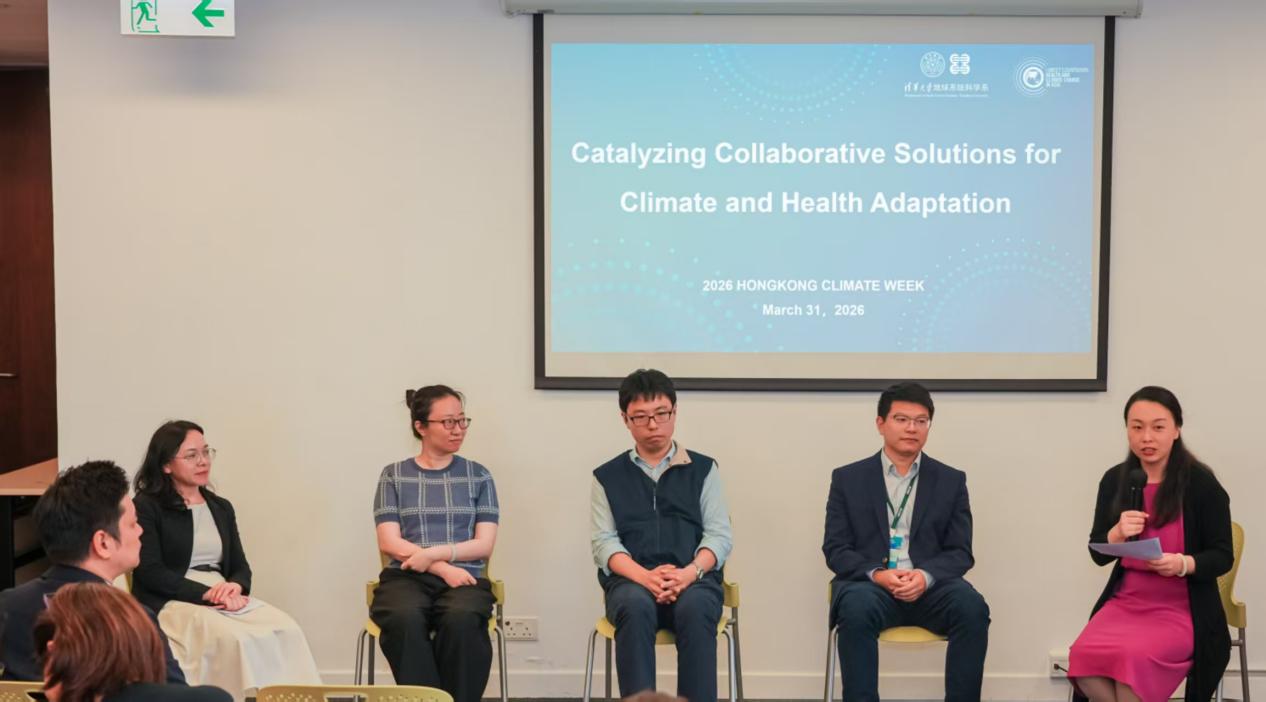
Roundtable Discussion
Professor Cai Wenjia from Tsinghua University introduced the overall arrangement of the 2026 Asian Climate & Health Innovation Hackathon. She, together with Yu Jun and student representatives from the University of Hong Kong and Tsinghua University, officially launched the hackathon this year. She encouraged more young people to advance the implementation of climate and health solutions through technological innovation.
Prof. Cai noted that the new hackathon will further focus on AI empowerment, renewable energy for health resilience, and protection of vulnerable groups. Winning teams will be granted opportunities for international roadshows and participation in COP31.
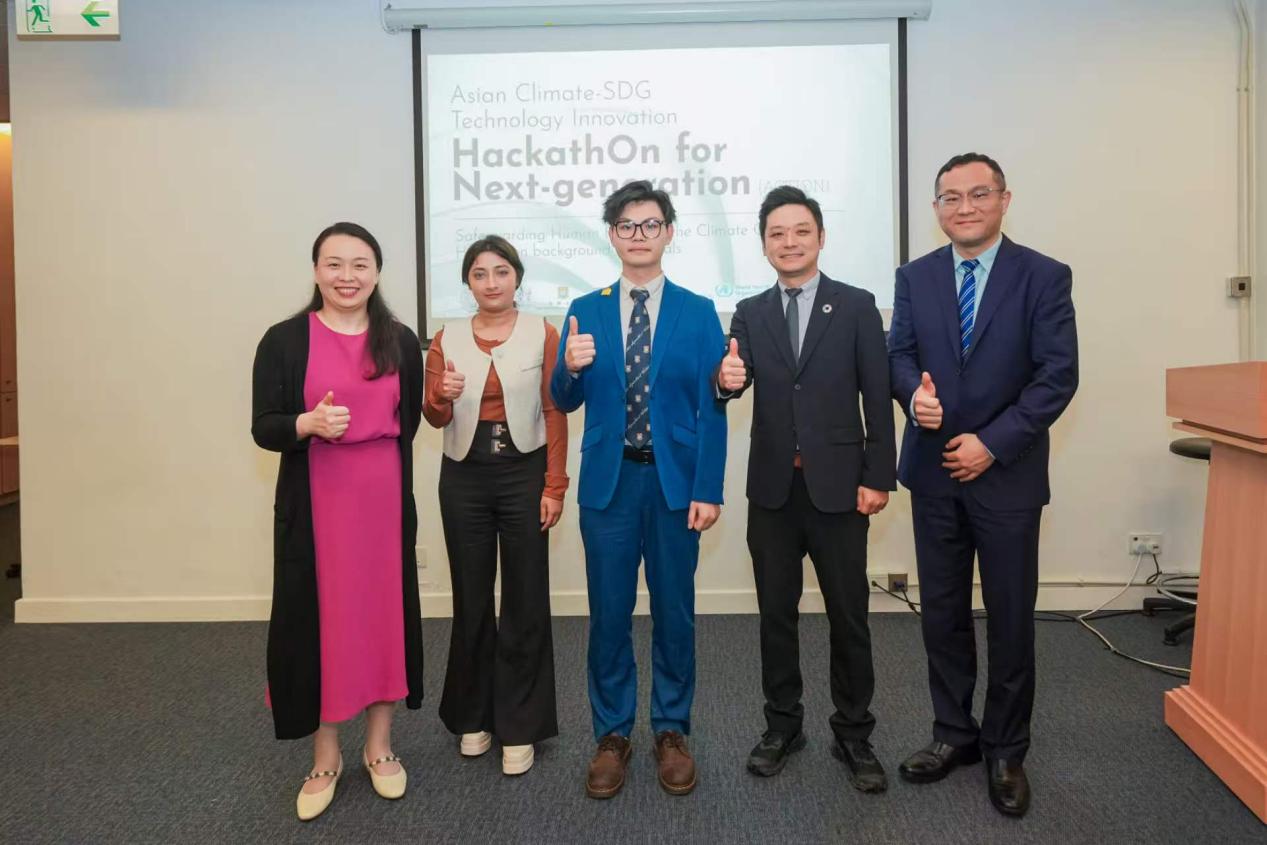
Launch Ceremony of the 2026 Asian Youth Students Climate Change and Health Innovation Hackathon
Pooling Wisdom from All Sides to Promote Interdisciplinary Governance
In the roundtable discussion session, Wang Haoyu, Senior Editor of The Lancet Planetary Health, Professor Zhang Qingpeng and Professor Chen Bin from the University of Hong Kong, and Professor Wang Qiong from Sun Yat-sen University held in-depth dialogues.
Experts present exchanged views on how to translate interdisciplinary innovations into solutions to global climate and health challenges, with a focus on exploring effective pathways for transforming scientific research achievements into policy tools and market applications, so as to advance the in-depth integration of climate adaptation and health governance.
From tracking global climate and health indicators and taking precautionary frontline rescue actions, to providing an international platform for youth innovation and hosting frontier dialogues on interdisciplinary governance, the forum fully demonstrated how experts and young people across various fields address the climate crisis and protect public health through collaborative innovation.
Going forward, Tsinghua DESS and The Lancet Countdown Asia Centre will continue to collaborate with all parties to promote scientific research, youth empowerment and international cooperation in the climate and health sector, making sustained contributions to building a climate-resilient society.
Edited by Wang Jiayin
Reviewed by Yu Le



 Picture News
 Hot News