Picture News
 Hot News
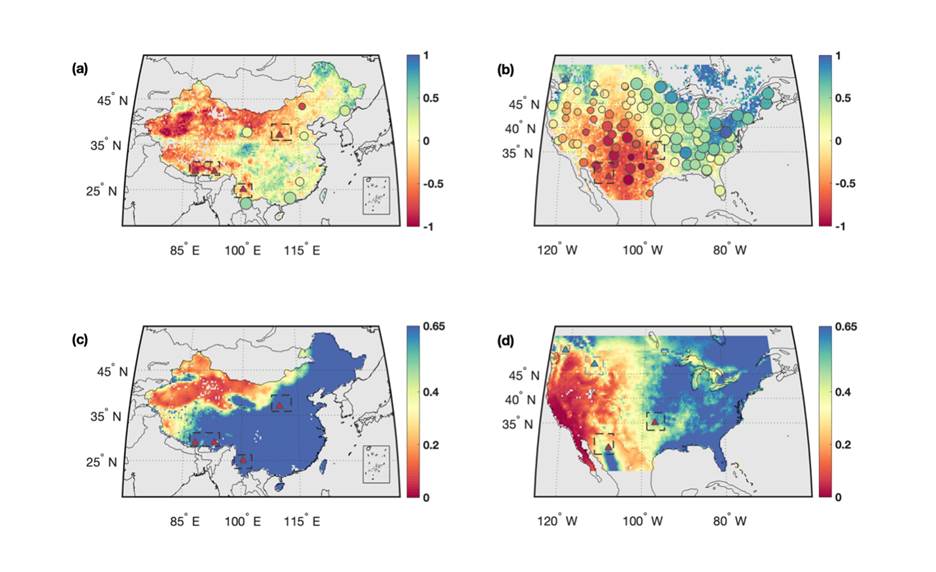
Aridity Index (AI), as an index to measure the degree of dryness and wetness in a region, is also one of the climate indexes often involved in the study of global change. In the traditional calculation, AI refers to the ratio of annual average precipitation to net radiation, but this calculation method fails to fully consider the spatial differences of land surface (such as soil texture and top...

On the morning of April 8, 2022, the Award Ceremony of the First Outstanding Shared Open Remote Sensing Dataset Collection Event was held at the Aerospace Information Research Institute (AIR) under the Chinese Academy of Sciences (CAS) both online and offline. The surface soil moisture dataset jointly published by the Research Group of Associate Professor Lu Hui of Tsinghua University and Dr Ya...
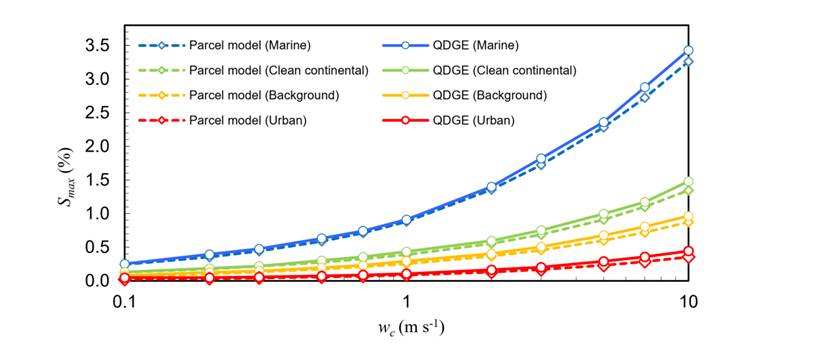
According to the Sixth Assessment Report of the Intergovernmental Panel on Climate Change, aerosol-cloud interaction, which plays a dominant role in aerosol climate effect, is also one of the main sources for uncertainties in climate simulation. As this process is subject to the nonlinear complex impacts of several variables, its calculation should be accurately parameterized. The widely used w...
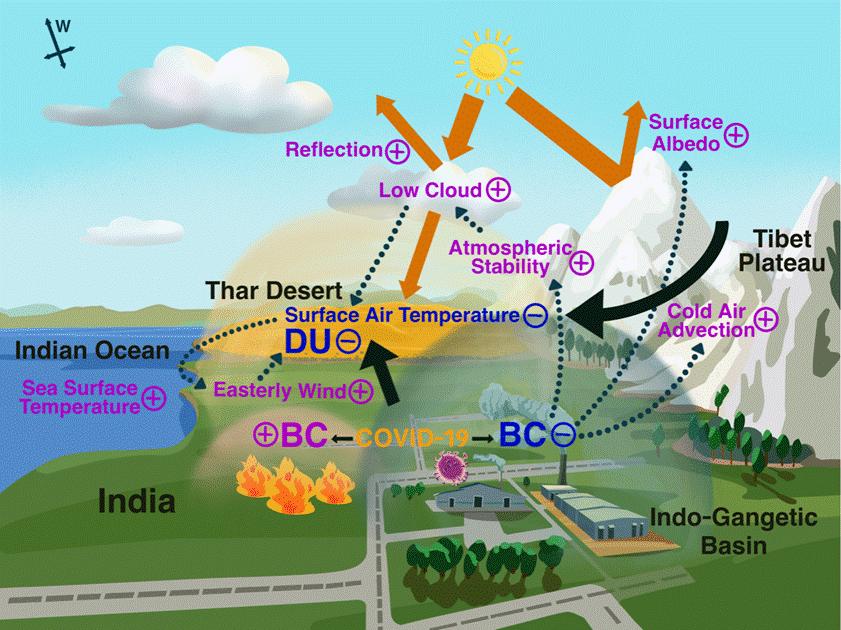
Associate Professor Wang Yong’s Research Group of the Department of Earth System Science (DESS), Tsinghua University, in collaboration with Professor Liu Xiaohong’s Research Group of Texas A&M University in the United States, as well as other research groups at home and abroad, used the research methods of observation data, long-term Reanalysis data and climate model simulation to analyze ho...
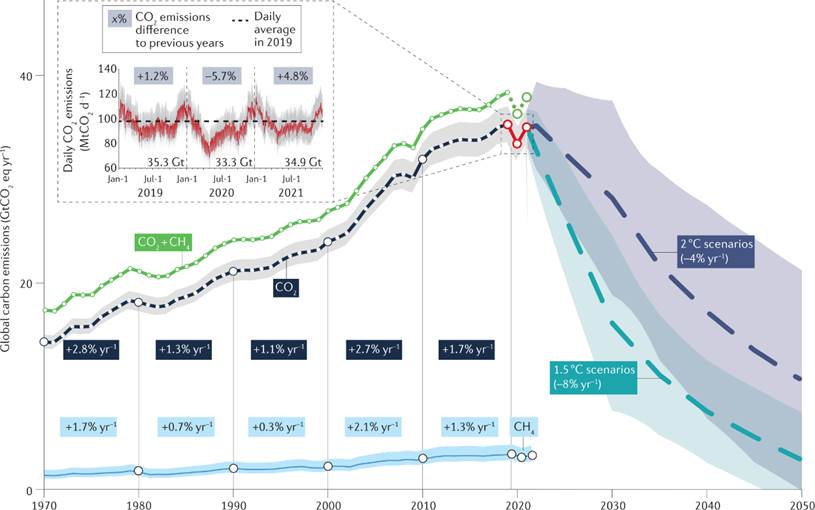
According to the latest assessment report of the Intergovernmental Panel on Climate Change (IPCC), to realize the goal set by Paris Agreement for limiting a global warming to 1.5°C and 2°C by 2100, starting from 2020, the global carbon budget for 1.5 °C and 2 °C warming is estimated to be 400 GtCO2 and 1,150 GtCO2 with 67% likelihood. Liu Zhu's Research Group of the Department of Earth Science ...
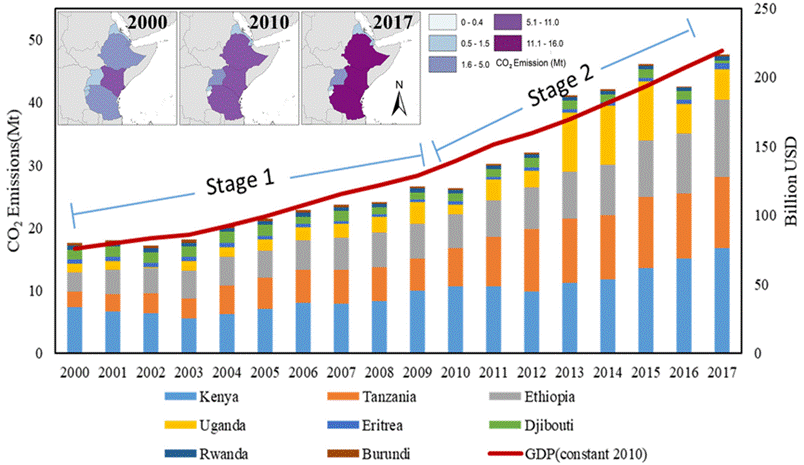
International efforts to mitigate climate change have historically focused on reducing energy-related CO2 emissions from developed economies, including the EU and the U.S., or countries with the largest populations, such as China and India, and a series of emission reduction policies has been implemented. But attention to the current situation of climate control in underdeveloped areas is lac...
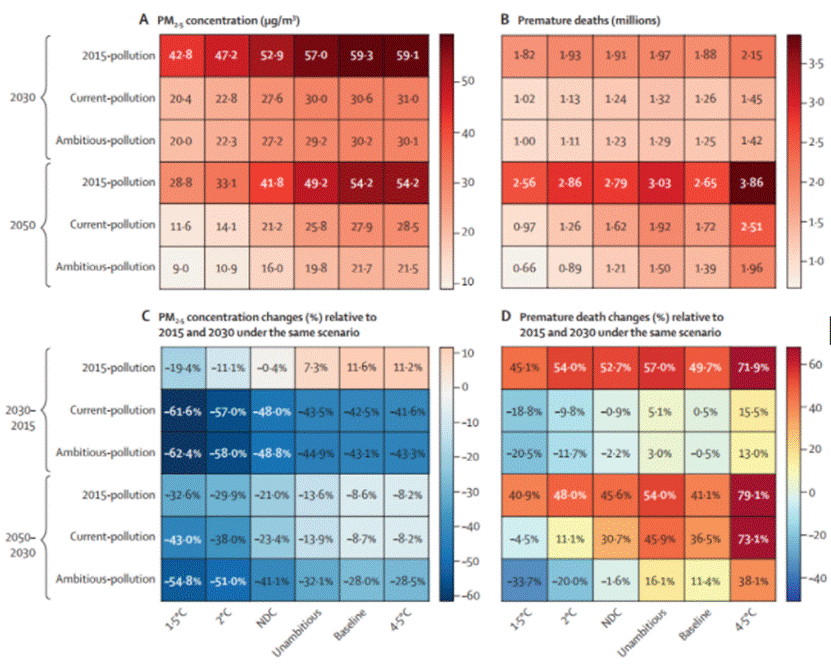
Over 1 million people die every year from diseases caused by exposure to outdoor PM2·5 air pollution. As air pollutants and carbon dioxide are of the same origin, all mainly coming from the combustion and utilization of fossil fuels, in addition to clean-air policies that target pollution emissions, climate policies aimed at reducing fossil-fuel CO2 emissions might also reduce the discharge of ...
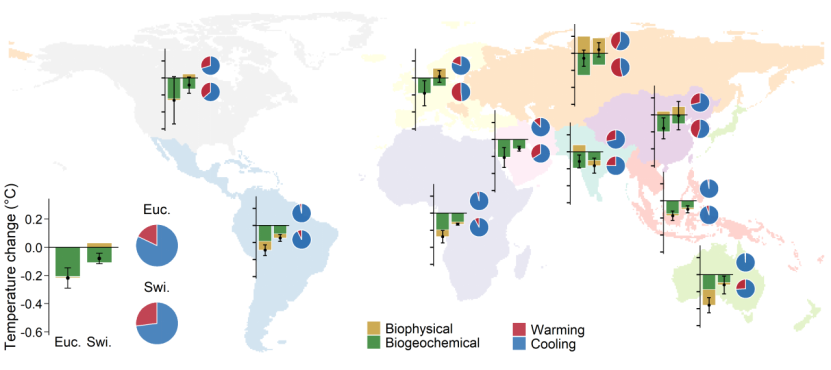
The production of bioenergy with carbon capture and storage (BECCS) is a pivotal negative emission technology for realizing the carbon neutrality goal and mitigating climate change. Its basic principle is to fix CO2 through plant growth by cultivating bioenergy crops. After the use of bioenergy, CO2 emitted can be captured and stored, thus reducing CO2 concentration in the atmosphere. The reduc...