The questionnaire for the first round of preliminary concept submission is now open. The link is: https://pcnselwfv0s1.feishu.cn/share/base/form/shrcneHfRhiq2Mbofdk3fvYS1se.
PPT or video is not required for this round. The deadline is July 8th.



 Join us2026 Timeline
 Hackathon 2025
Welcoming remarks
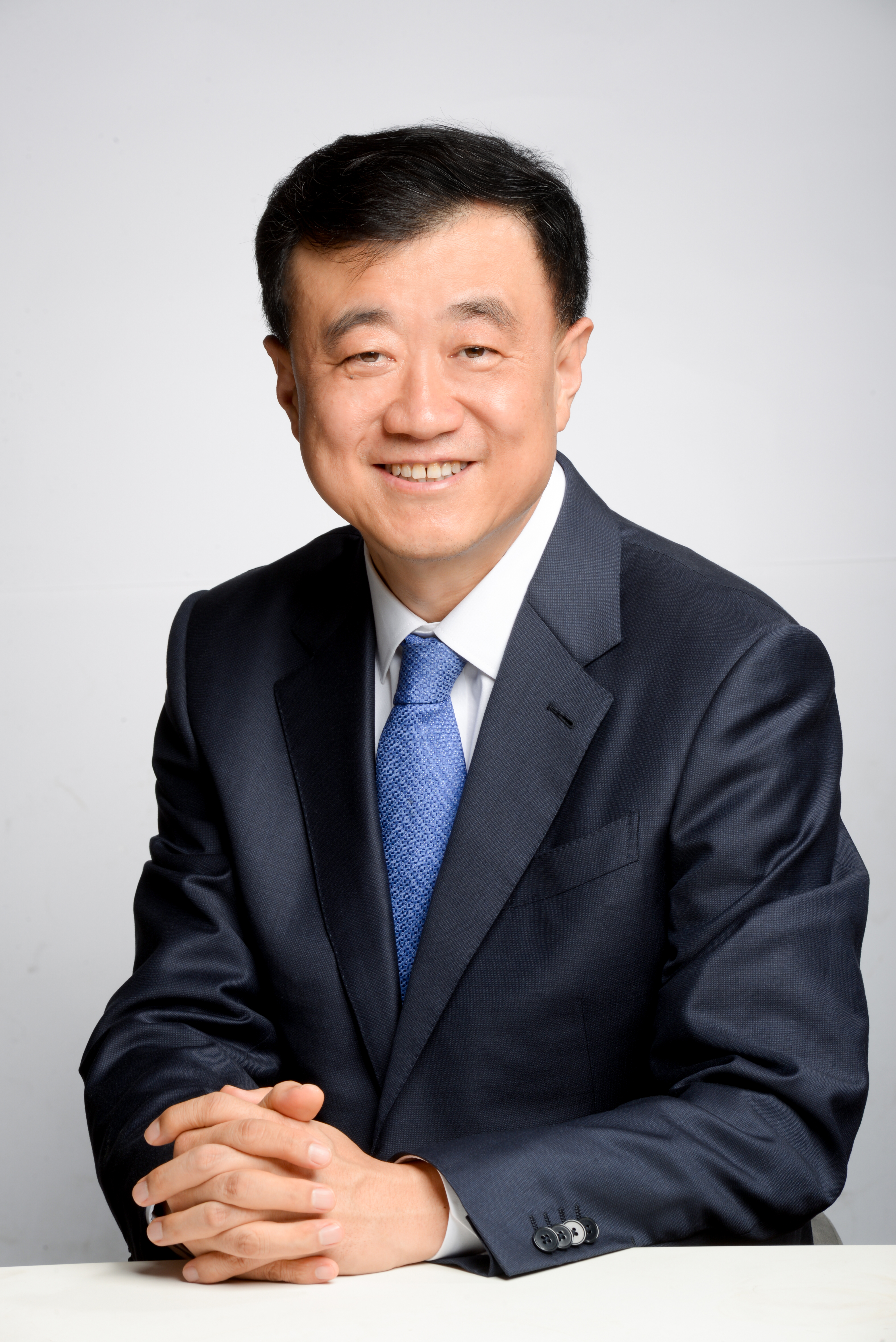
“Climate-related health risks are among the most urgent and complex issues of our time. Addressing them calls for deep scientific understanding, technological ingenuity, and human-centered design. This hackathon is not just a platform for innovation—it is a crucible for cultivating future leaders who can integrate knowledge into action. Tsinghua University is very proud to support these emerging changemakers.”

“Safeguarding human health in a changing climate demands more than incremental change—it requires transformative thinking and cross-sector collaboration. This innovation challenge empowers the next generation to reimagine solutions at the intersection of climate and health. At The University of Hong Kong, we are committed to supporting these pioneers to turn their bold ideas into action.”
Results & Announcements
Introduction to the hackathon

Why ACTION 2026
More+Climate change is a health emergency. Yet most responses remain in policy papers and academic circles. What’s missing are tangible, scalable, and cross-sector solutions that can save lives.ACTION 2025 proved that young innovators can fill this gap·200+ students from 14 leading Asian universities·Supported by the World Meteorological Organization (WMO) and the World Health Organization (WHO) –...
Climate change is a health emergency. Yet most responses remain in policy papers and academic circles. What’s missing are tangible, scalable, and cross-sector solutions that can save lives.
ACTION 2025 proved that young innovators can fill this gap
·200+ students from 14 leading Asian universities
·Supported by the World Meteorological Organization (WMO) and the World Health Organization (WHO) – included in WMO Regional Association II Action Plan
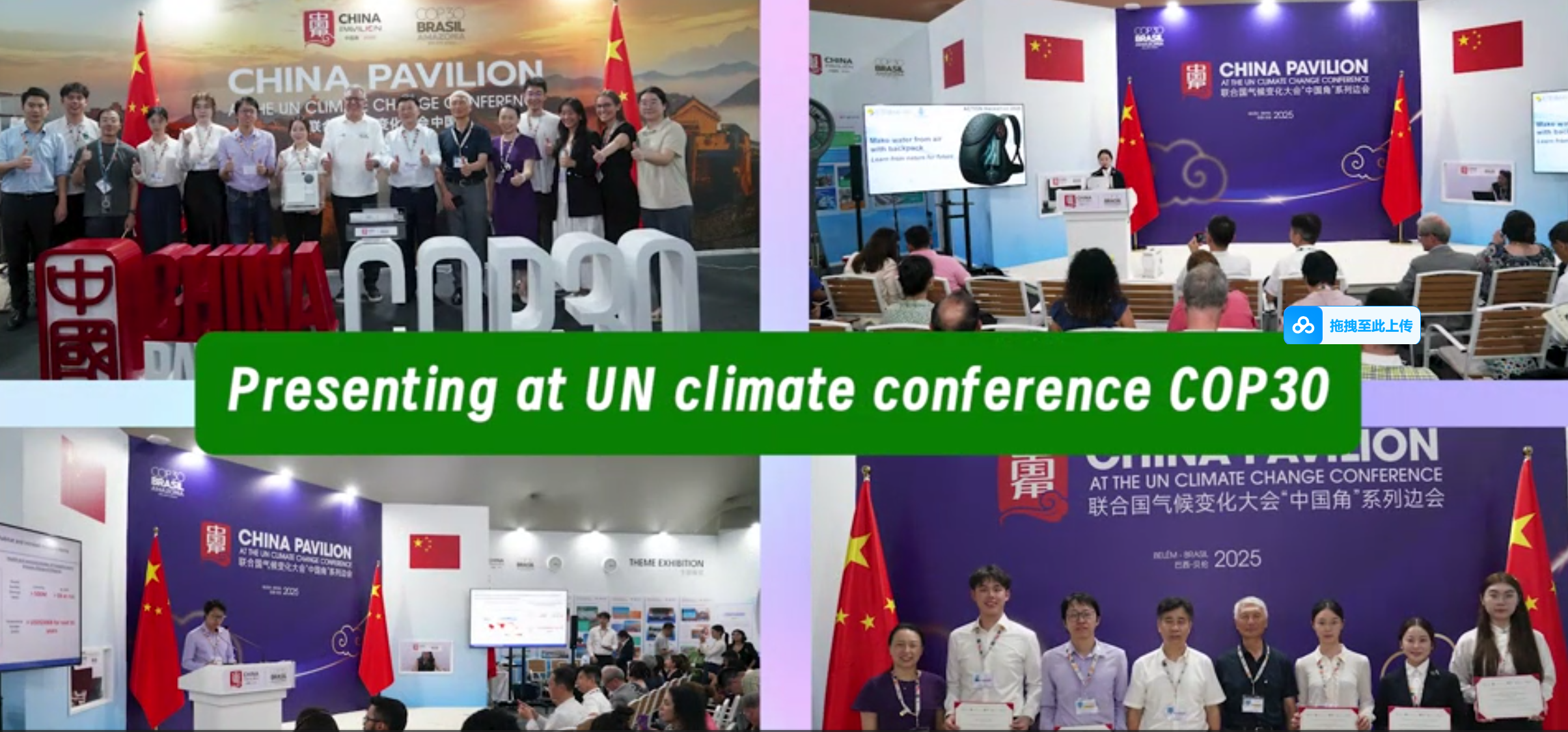
·5 finalist teams showcased at COP30 (Brazil) – praised by ministerial leaders
·Innovations (examples): shared cooling vests for delivery riders, biomimetic water-from-air backpacks, AI mosquito surveillance for dengue outbreaks
ACTION 2026 goes further
We are launching two tracks and four themes aligned with real-world climate and health priorities – and offering finalists a pathway to present at COP31 in Türkiye.
What You Gain
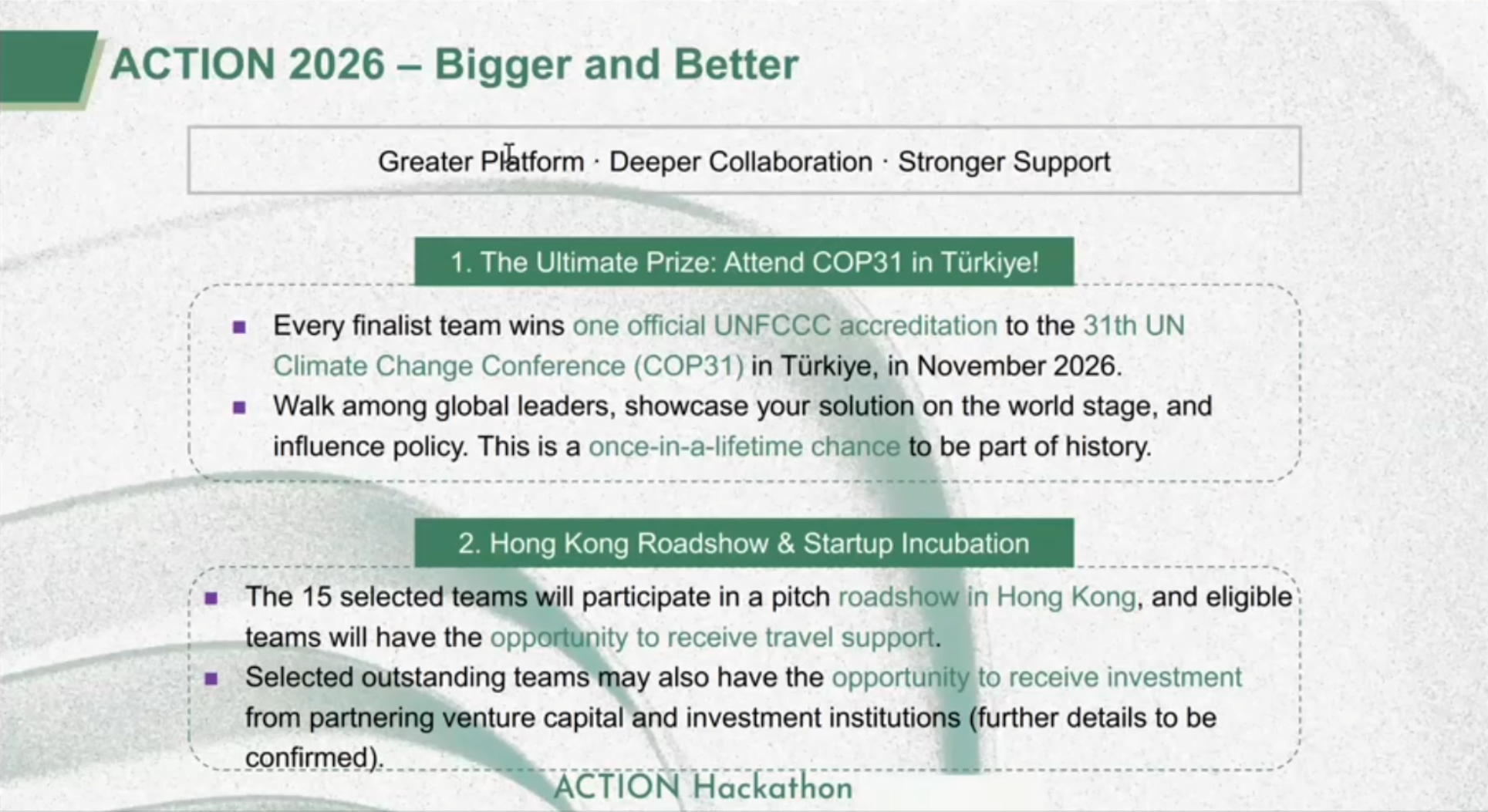
More+1. COP31 Access (Türkiye)Each finalist team receives one official UNFCCC accreditation to COP31. Present your solution to senior UN officials and global ministers.2. Hong Kong RoadshowThe 15 selected teams will participate in a pitch roadshow in Hong Kong, and eligible teams will have the opportunity to receive travel support. Selected outstanding teamsmay also have the opportunity to receive e...
1. COP31 Access (Türkiye)
Each finalist team receives one official UNFCCC accreditation to COP31. Present your solution to senior UN officials and global ministers.
2. Hong Kong Roadshow
The 15 selected teams will participate in a pitch roadshow in Hong Kong, and eligible teams will have the opportunity to receive travel support. Selected outstanding teamsmay also have the opportunity to receive equity investment from partnering venture capital and investment institutions (further details to be confirmed).
3. Expert Training & Mentorship
All registered teams receive climate-health workshops and entrepreneurship training. The top 50 teams selected after the first-round concept submission will receive professional mentorship from distinguished professors, industrial leaders and UN officials.
4. Global Recognition
All teams that advance to the top 50 will receive a certificate with logos of all organizing institutions. (In ACTION 2025, all teams nominated by universities received certificates included logos from WMO and WHO)
Note: An invitation to co-organize this year’s hackathon has again been extended to WMO and WHO, with confirmation anticipated in the first half of 2026. Additional participation benefits will be announced in due course.
The 2026 Hackathon Tracks and Themes
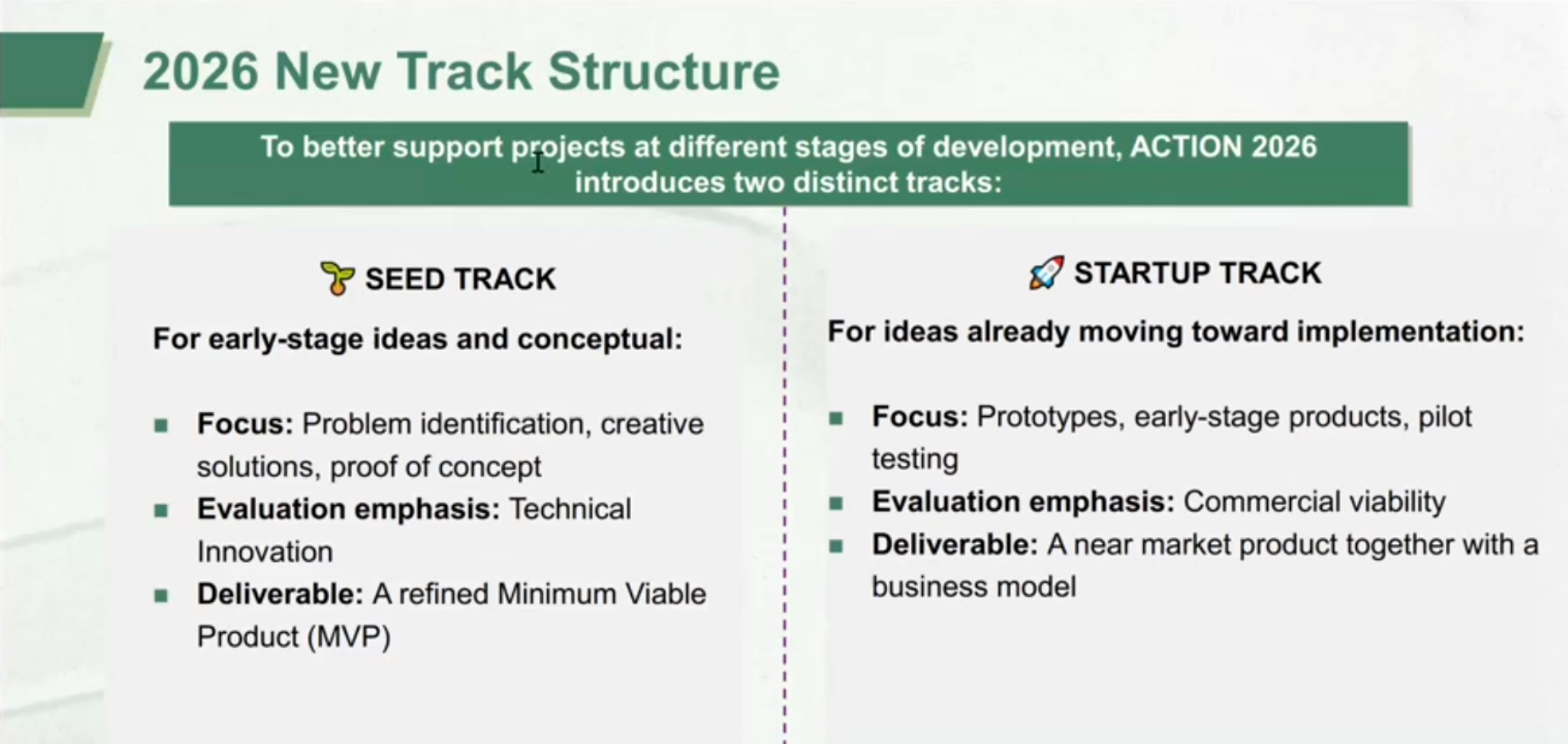
More+Teams choose one track. Solutions can be early‑stage ideas (Seed Track) or in the R&D or pilot‑testing phase (Startup Track). Both tracks compete together throughout the entire competition – from the initial screening through the semi‑finals to the finals – and teams from both tracks will advance at each stage. The distinction between tracks exists solely to enable tailored mentorship an...
Teams choose one track. Solutions can be early‑stage ideas (Seed Track) or in the R&D or pilot‑testing phase (Startup Track). Both tracks compete together throughout the entire competition – from the initial screening through the semi‑finals to the finals – and teams from both tracks will advance at each stage. The distinction between tracks exists solely to enable tailored mentorship and evaluation.
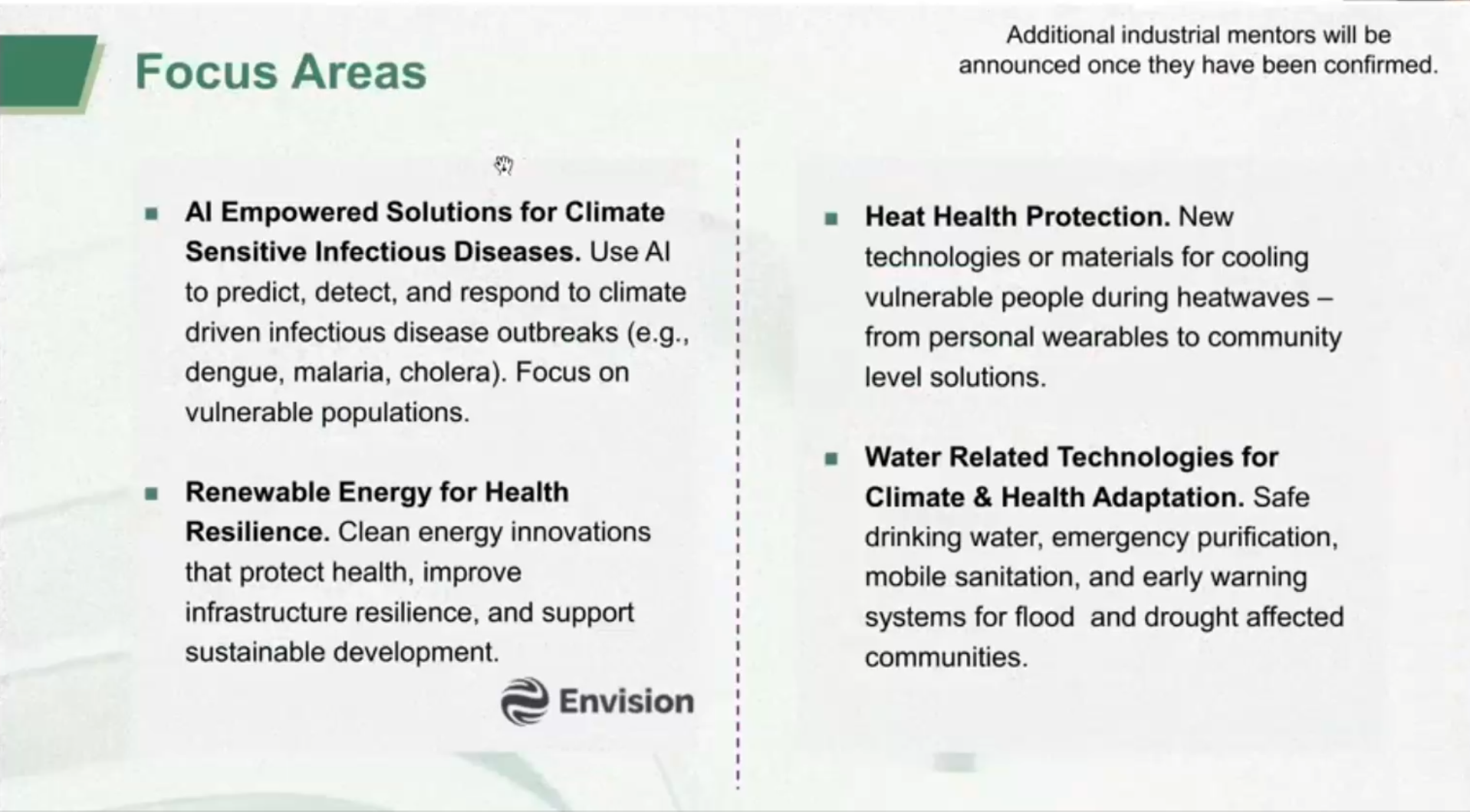
Theme 1. AI-Empowered Solutions for Climate-Sensitive Infectious Diseases
Use AI to predict, detect, and respond to climate-driven infectious disease outbreaks (e.g., dengue, malaria, cholera). Focus on vulnerable populations. Relevant solutions include but are not limited to:
· AI‑driven early warning systems for heatwaves, disease outbreaks, and other climate‑related health risks
· Intelligent surveillance and prediction platforms for climate‑sensitive infectious diseases (e.g., dengue, malaria)
· AI‑powered personalized health alerts and digital tools for vulnerable groups
· Smart vector control systems (e.g., mosquito monitoring and drone‑based interventions)
· Low‑cost, AI‑assisted rapid diagnostics for under‑resourced settings
Teams in this theme will receive dedicated AI mentorship. Teams in other themes may also use AI but are not guaranteed specialized AI mentorship.
Theme 2. Renewable Energy for Health Resilience
Clean energy innovations that protect health, improve infrastructure resilience, and support sustainable development. Relevant directions include but are not limited to:
· Renewable-powered solutions for cold storage, water purification, and sanitation in underserved or disaster-affected areas
· Climate-resilient microgrids and distributed energy systems for hospitals, clinics, schools, and vulnerable communities
· Sustainable fuel solutions and commercialization models for cleaner transport and healthier environments
· AI-enabled new energy solutions for energy management, forecasting, and emergency response
· Circular economy and recycling solutions for new energy equipment to reduce waste and environmental health risks
Theme 3. Heat Health Protection
New technologies or materials for cooling vulnerable people during heatwaves – from personal wearables to community-level solutions. Relevant directions include but are not limited to:
· New technologies or materials for protecting the health of vulnerable groups during heatwaves (such as the elderly, outdoor workers, women, children, persons with disabilities, specific occupational groups, and marginalized communities)
· New temperature regulation technologies or materials for indoor and outdoor environments
Theme 4. Water-Related Technologies for Climate & Health Adaptation
Safe drinking water, emergency purification, mobile sanitation, and early warning systems for flood and drought-affected communities. Relevant solutions include but are not limited to:
· Safe drinking water and emergency purification systems for flood‑prone and drought‑affected areas
· Mobile sanitation facilities (e.g., floating toilets) and personal hygiene technologies for displacement scenarios
· Low‑cost water quality monitoring and early warning systems for vulnerable communities
· Rainwater harvesting, storage and efficient water reuse under drought conditions
· Nature‑based solutions for water security that simultaneously improve health outcomes
Submission Requirements
How to Apply
More+Step 1: Simple Registration – Show Your InterestComplete a brief online registration form, including the name, university, email, and a short expression of interest etc. No detailed proposal required at this stage. (https://pcnselwfv0s1.feishu.cn/share/base/form/shrcnMJ1kHODuiQS9UIoo2LpFXd)Step 2: Info Sessions, Trainings, and First‑Round Concept SubmissionInfo sessions will be held on May 0...
Step 1: Simple Registration – Show Your Interest
Complete a brief online registration form, including the name, university, email, and a short expression of interest etc. No detailed proposal required at this stage. (https://pcnselwfv0s1.feishu.cn/share/base/form/shrcnMJ1kHODuiQS9UIoo2LpFXd)
Step 2: Info Sessions, Trainings, and First‑Round Concept Submission
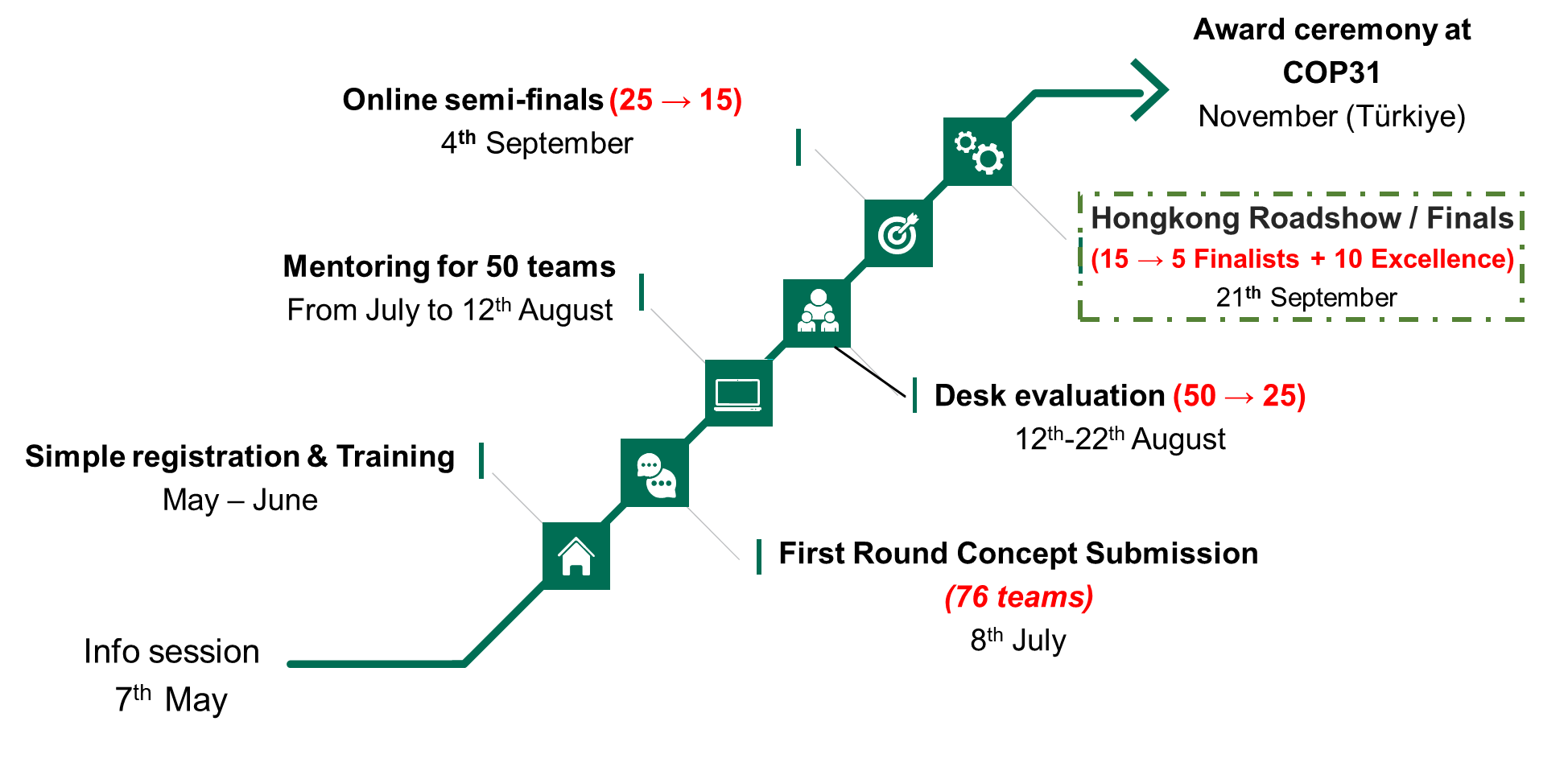
Info sessions will be held on May 07, 2026 (virtual and recorded). Training modules will be released progressively after the info sessions. After the training sessions, teams will be invited to complete an online questionnaire (published on the event website) describing their core idea, target beneficiaries, and how they address one of the four challenge tracks. No PPT, no video required for this round.
Step 3: Mentoring & Full Submission
After initial screening, up to 50 teams will be selected to receive professional mentorship (depending on the team’s project maturity and background, industry mentors may come from either corporate partners or experienced academic mentors) and invited to submit a full application, including:
·Updated proposals
·8-minute demo video (English, MP4, max 8 minutes) – no PPT required
·For the Startup Track: also a Minimum Viable Product (MVP) demonstration (video or live link)
These submissions will be reviewed through a desk evaluation by the judging panel.
Step 4: Semi-Finals
Based on desk evaluation, up to 25 teams will advance to the online semi-finals.
From these, the judges will select 15 teams to proceed to the roadshow.
Step 5: Hongkong Roadshowe
The 15 teams will participate in Hongkong Roadshow to pitch their projects to investorsand experts.
Based on roadshow performance, the judges will select:
·5 Finalist Teams – to compete in the global finals at COP31
·10 Excellence Award Teams – recognized for outstanding innovation
Among the 5 Finalist Teams, at least one will come from the Seed Track and at least one from the Startup Track. The final distribution between tracks will be determined by the judging panel based on the quality of submissions.
Note: All teams that advance to the roadshow stage will receive international exposure opportunities – the nature and scale of exposure will depend on their project theme and region. More benefits will be announced in due course.
Step 6: Finals at COP31 (Türkiye)
The 5 Finalist Teams will travel to COP31 to present their advanced product/prototype in front of global leaders, UN officials, and investors.
·Seed Track teams will present a refined Minimum Viable Product (MVP).
·Startup Track teams will present a near-market product together with a business model.
Who Can Apply
More+·Teams of 2–5 members from the same university (only limited to the invited universities below)
·Alumni may join as team members.
·At least one member must be a currently enrolled student (undergraduate and graduate student).
·Teams of 2–5 members from the same university (only limited to the invited universities below)
·Alumni may join as team members.
·At least one member must be a currently enrolled student (undergraduate and graduate student).
·Interdisciplinary teams strongly encouraged (engineering, public health, data science, design, business, etc.)
Invited Universities (in alphabetical order, more to be added):
·Beijing Institute of Technology (China)
·Chulalongkorn University (Thailand)
·Fudan University (China)
·Indian Institute of Technology Bombay (India)
·King Saud University (Saudi Arabia)
·Nanjing University (China)
·Nanjing University of Information Science and Technology (China)
·Nanyang Technological University (Singapore)
·National University of Singapore (Singapore)
·Nazarbayev University (Kazakhstan)
·Peking University (China)
·Renmin University of China (China)
·Seoul National University (Republic of Korea)
·Shanghai Jiao Tong University (China)
·The Hong Kong University of Science and Technology (China)
·The University of Hong Kong (China)
·The University of Tokyo (Japan)
·Tsinghua University (China)
·United Arab Emirates University (UAE)
·Universiti Malaya (Malaysia)
·University of Colombo (Sri Lanka)
·University of Indonesia (Indonesia)
·University of Yangon (Myanmar)
·Zhejiang University (China)
Training materials
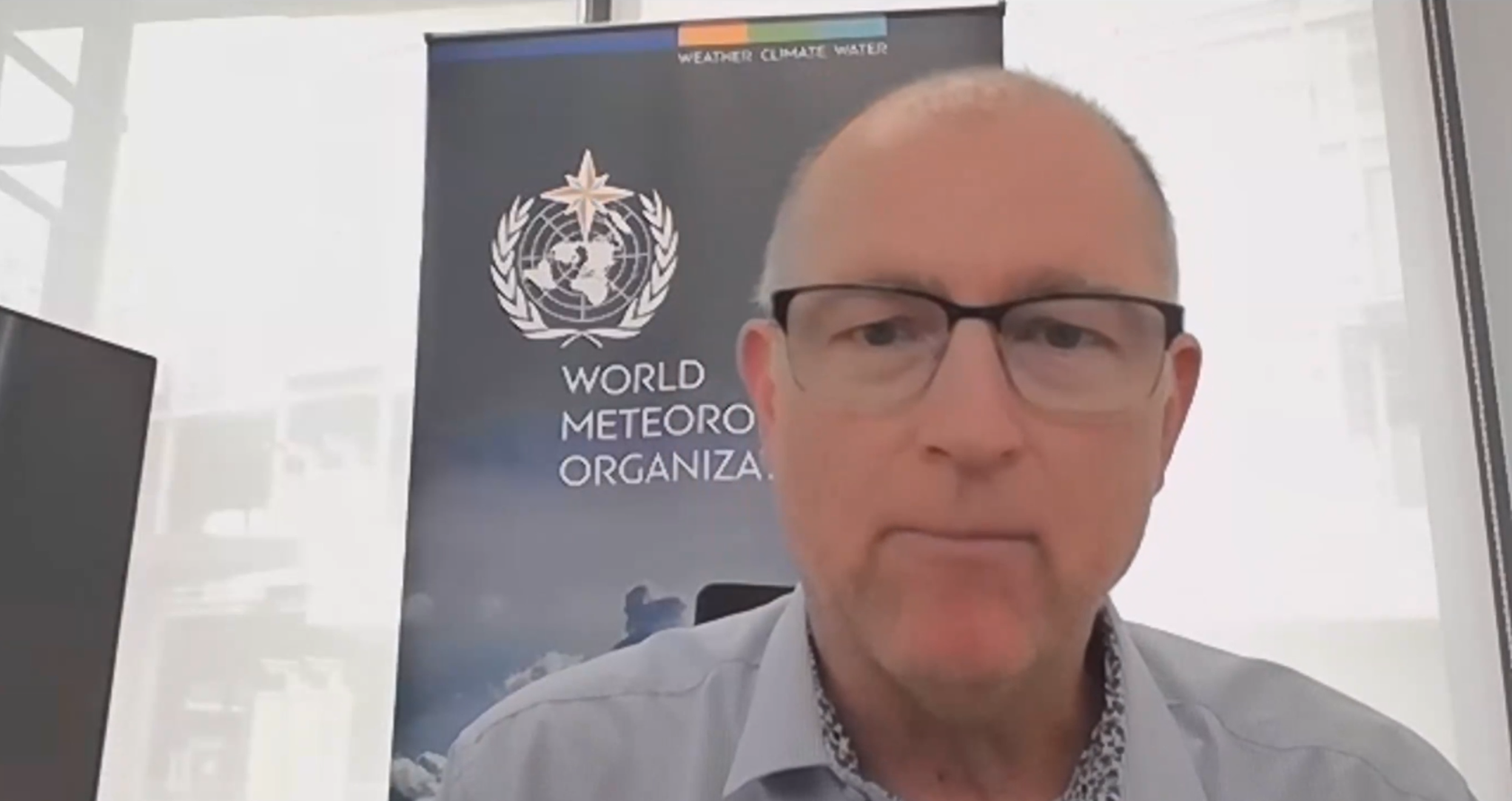
Encouragement words from WMO

Encouragement words from WHO
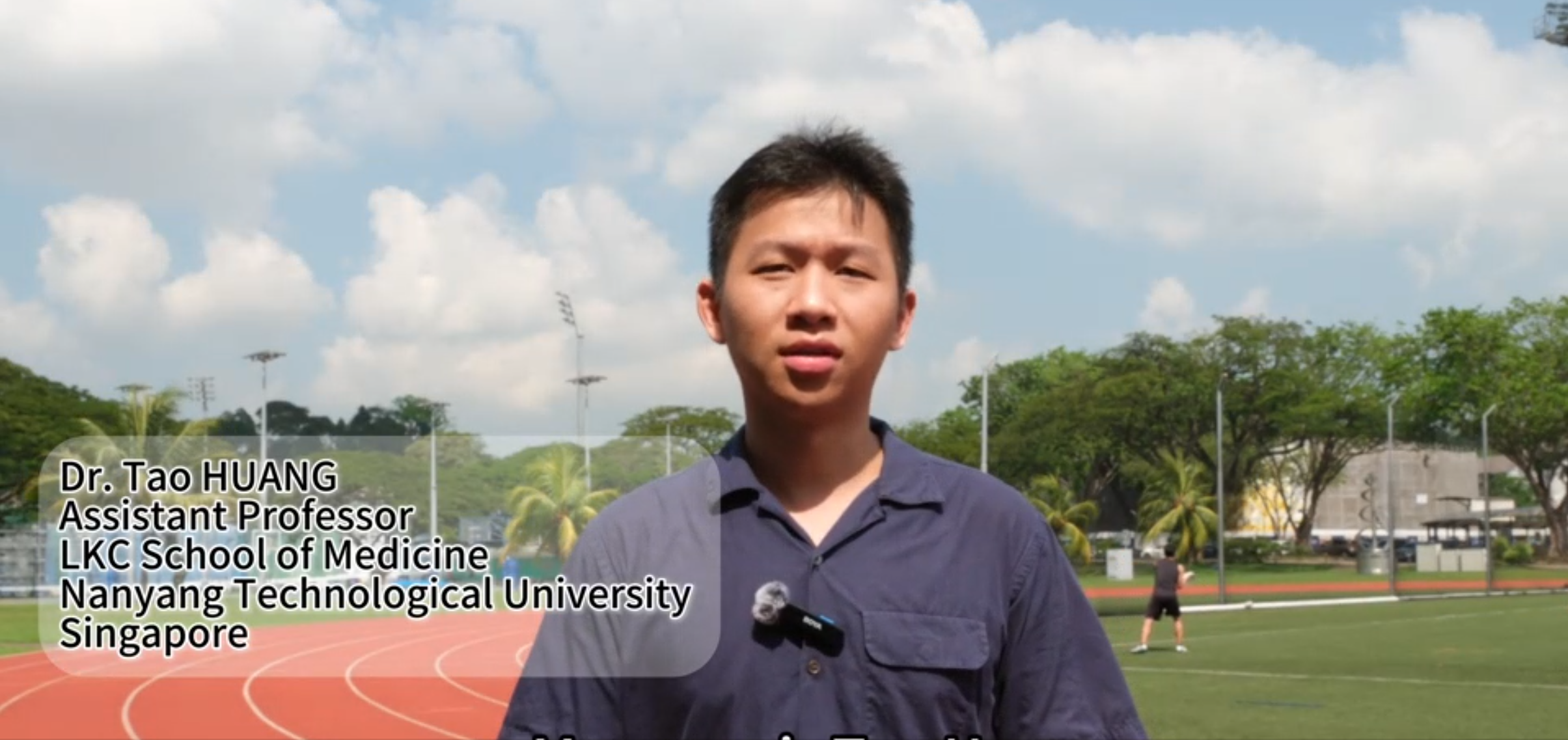
Heat is a health cirsis not just a weather event --Huang Tao
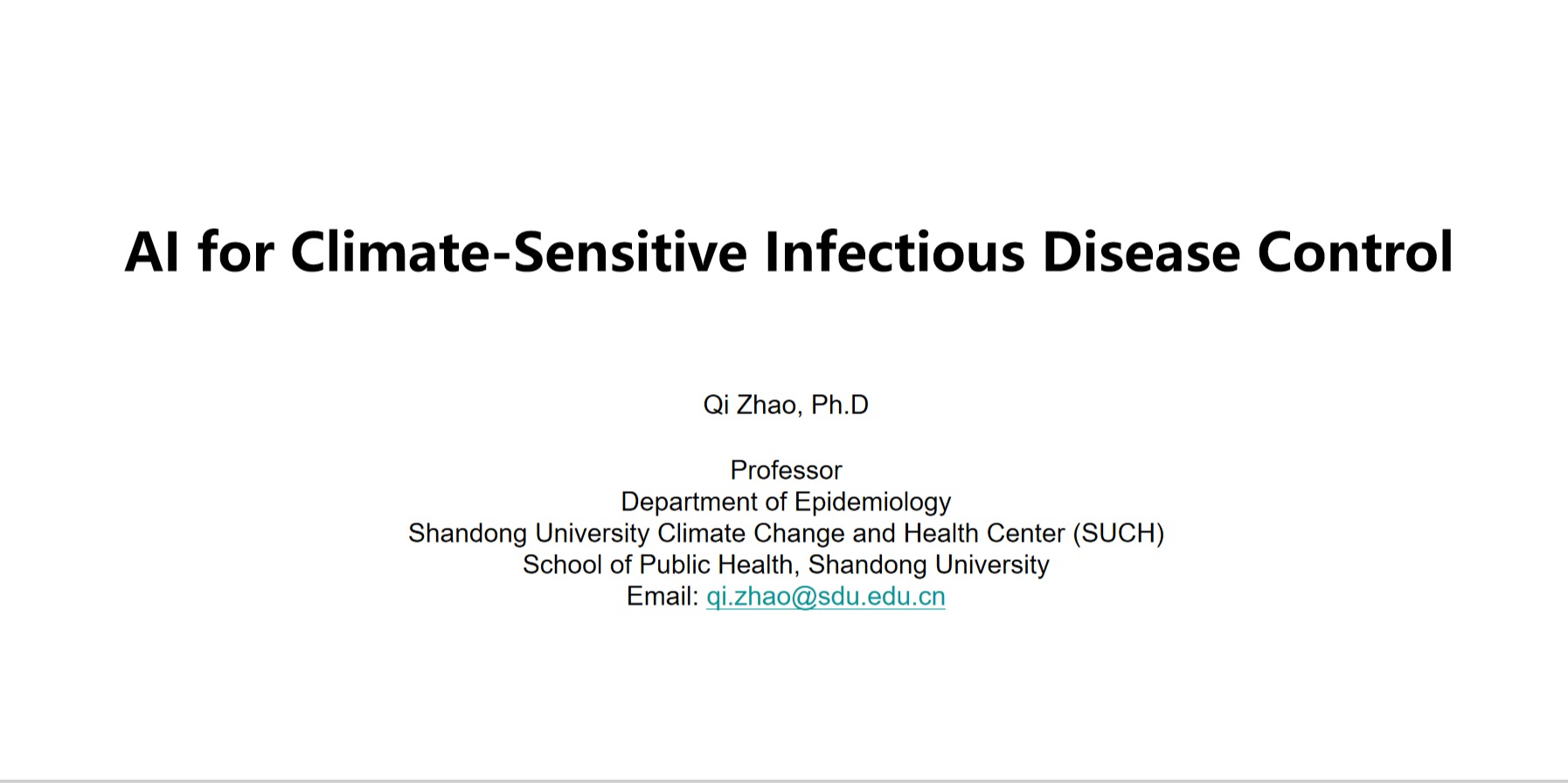
AI for Climate-Sensitive Infectious Disease Control
New innovations begin with curiosity, listening and collaboration ----UMT Maziar
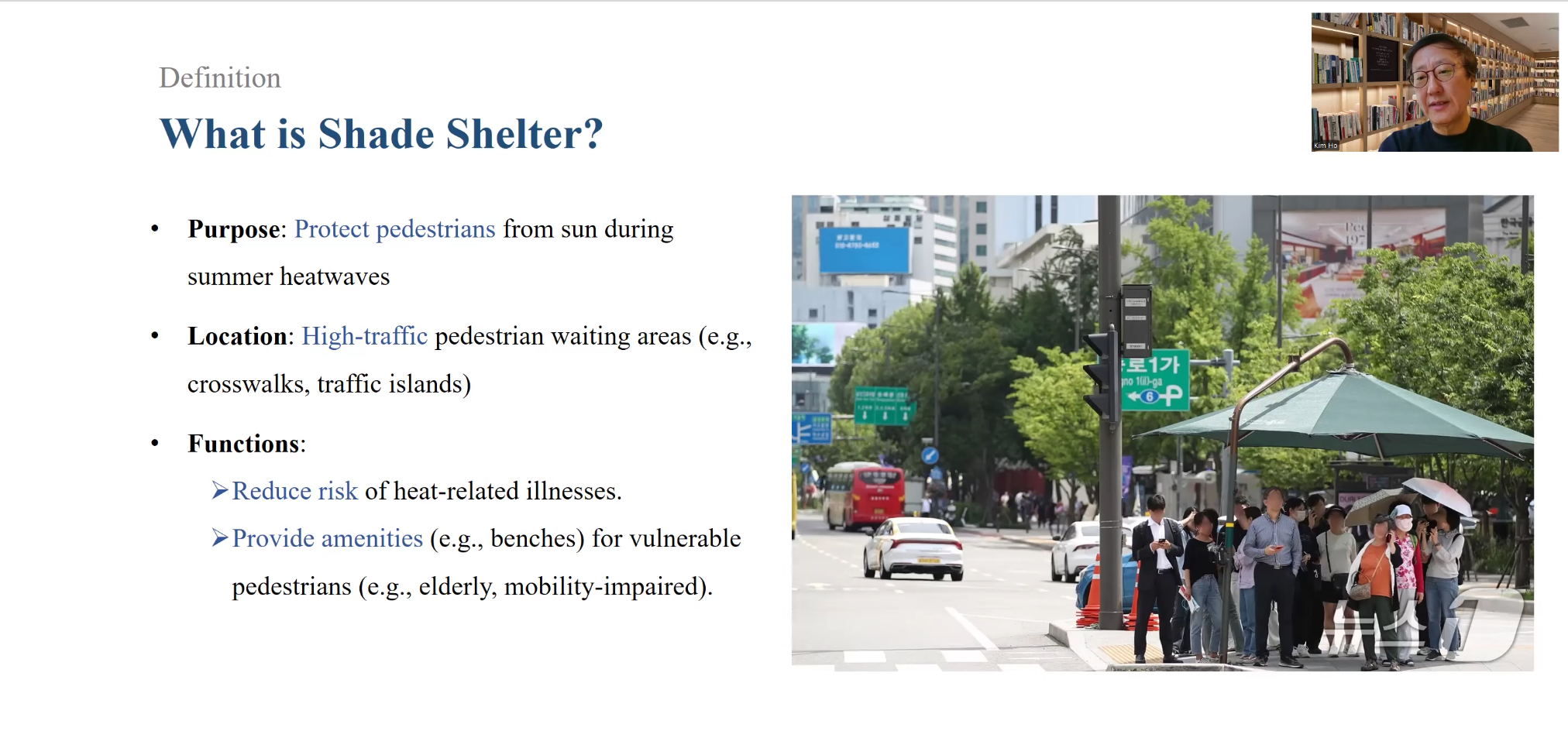
Protect pedestrians from sun during summer heatwaves--Ho
Population health economic losses under high temerature risk-Zhang Chi
Yang Geng(Tsinghua University):Built Environment Technology Innovations for Enhancing Climate Change Adaptability and Human Health.
Jason Lee(National University of Singapore):Heat Resilience for Human Health and Potential.
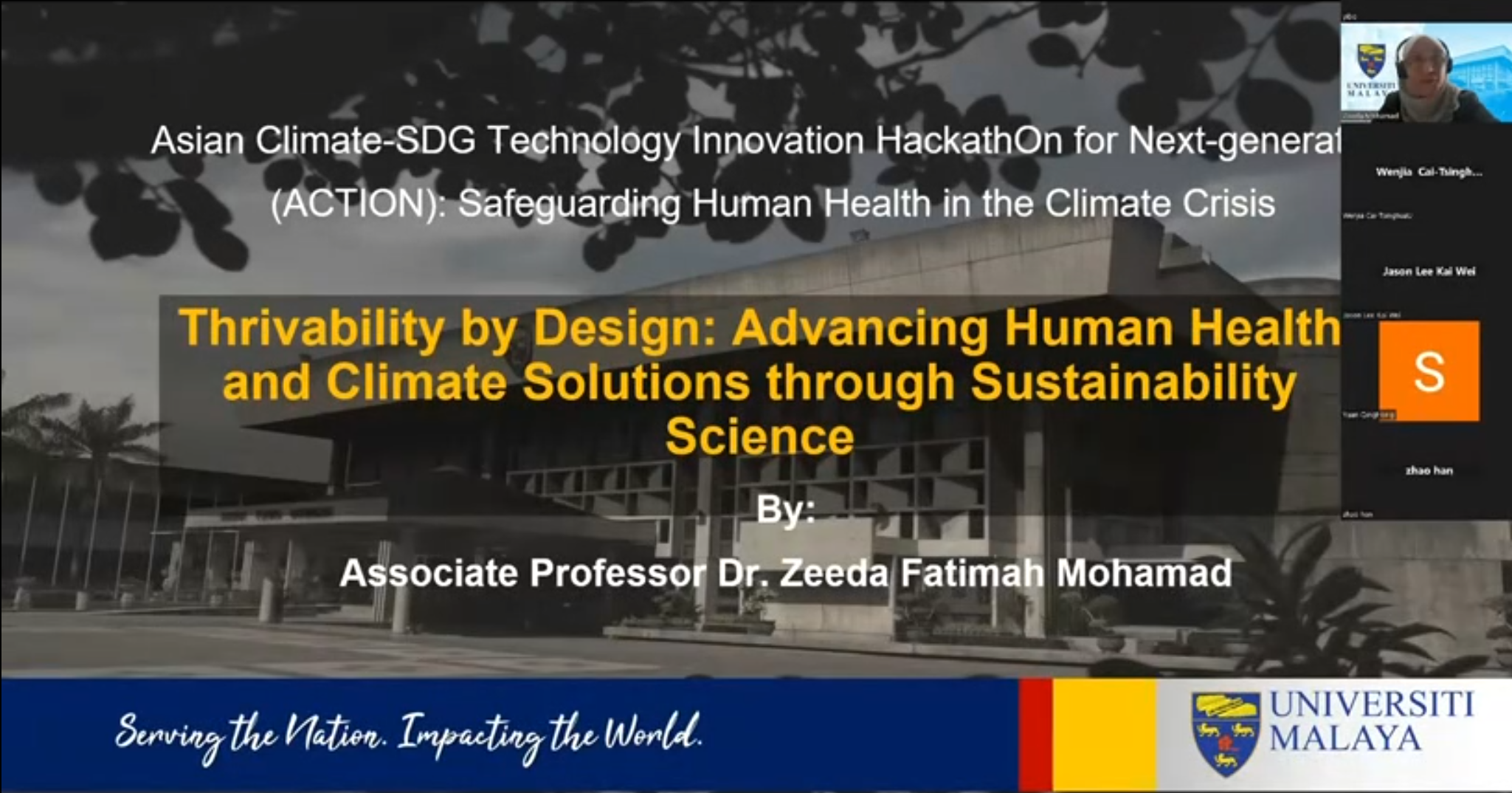
Zeeda Mohamad(Universiti Malaya):Thrivability by Design: Advancing Human Health and Climate Solutions through Sustainability Science.
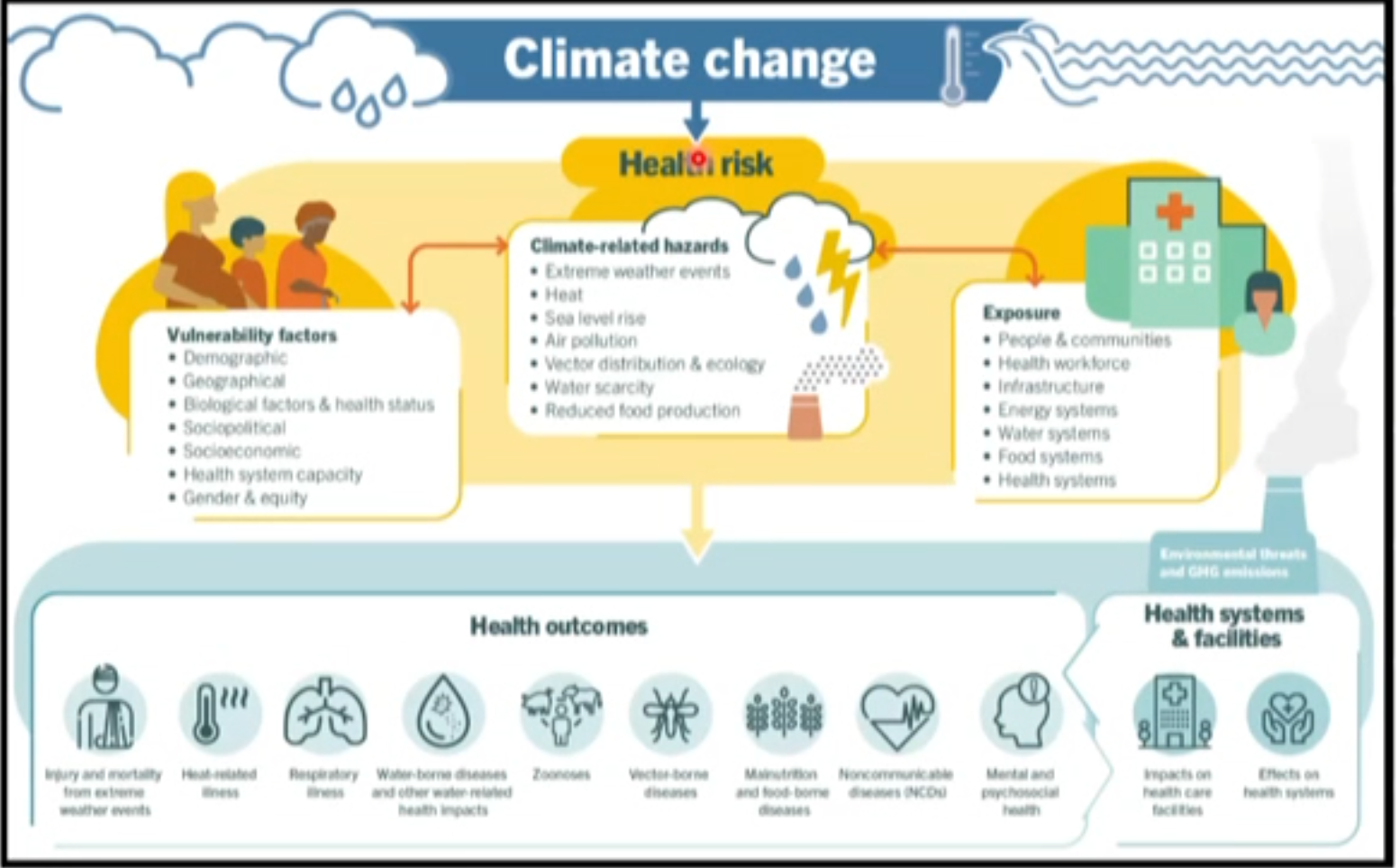
Ho Kim(Seoul National University):Minimizing Health Impacts of Climate Change.
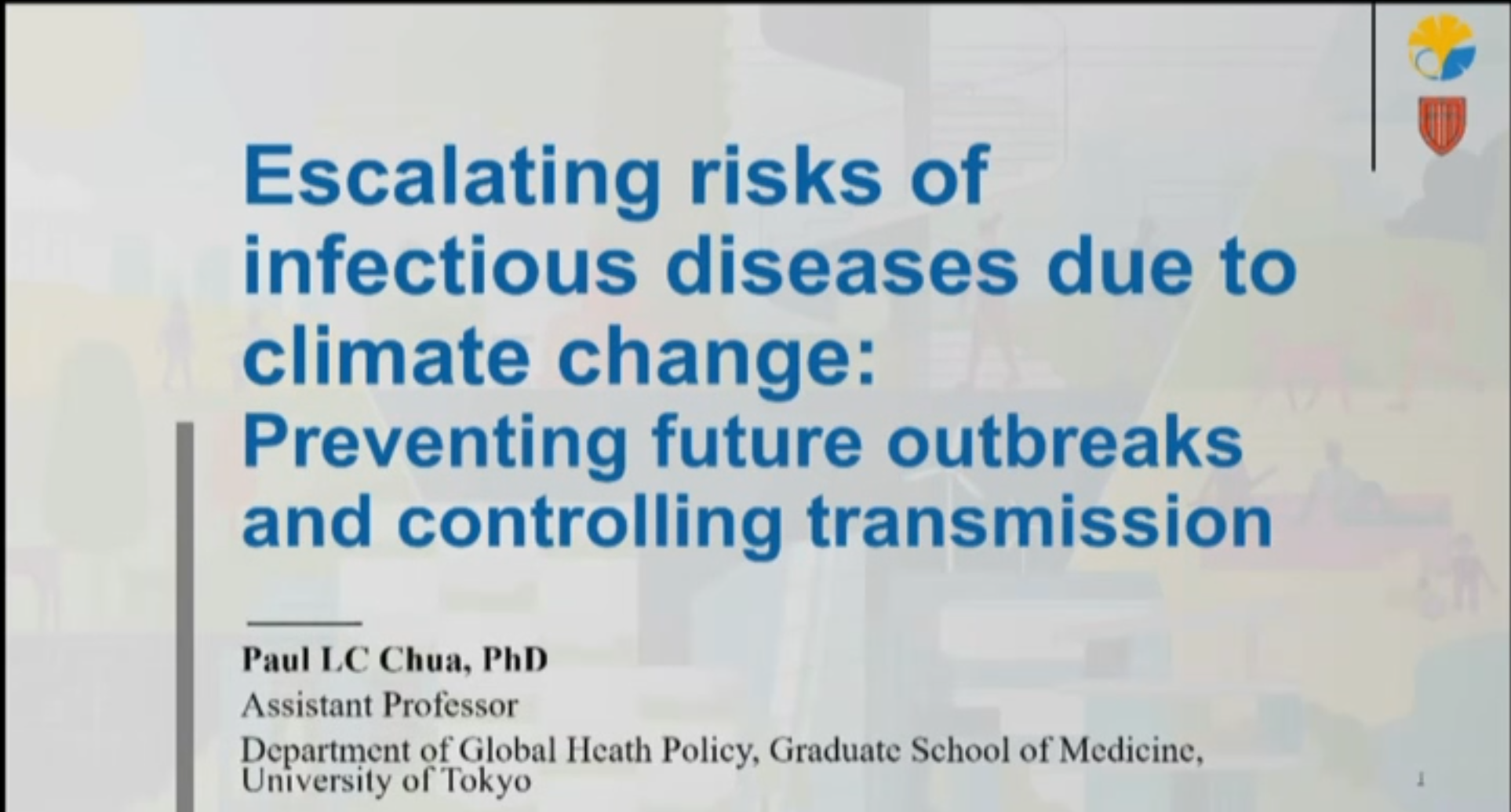
Paul Chua(University of Tokyo):Escalating risks of infectious diseases due to climate change: Preventing future outbreaks and controlling transmission.
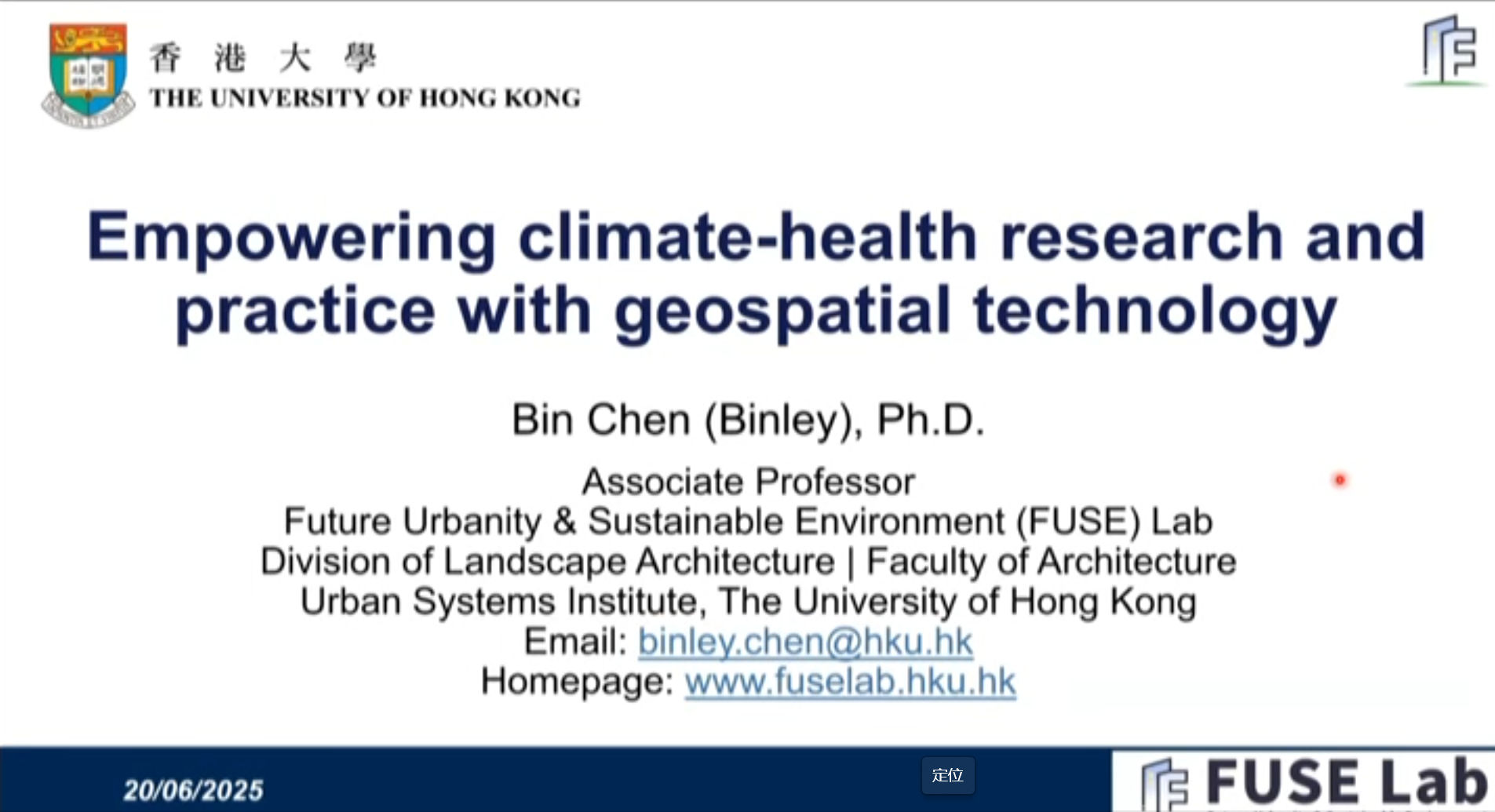
Bin Chen(the University of Hong Kong):Empowering climate-health research and practice with geospatial technology.
Prizes of ACTION 2026
Challenge Themes in ACTION 2026
Tracks in ACTION 2026
Judging Criteria
Organizers





Envision Energy is the world’s leading green technology company. With the mission of “solving challenges for humanity’s sustainable future”, Envision Energy is committed to becoming a net zero technology partner for global enterprises, governments, and institutions. Encompassing three major business sectors - Smart Wind Turbines, Energy Storage, and Green Hydrogen Solutions, Envision Energy constructs comprehensive solutions for energy transition. The company also manages Envision-Hongshan Carbon-Neutral Fund and owns Envision Racing Formula E team, which conquered the Formula E Teams’ Championship in 2023.
Participating Universities





.png)




Collaborating Institutions