Venue: Room 1103-2, Building 2, Ziqiang Technology Building, Tsinghua University
Time: 10:30 AM – 11:30 AM, Friday, May 22, 2026
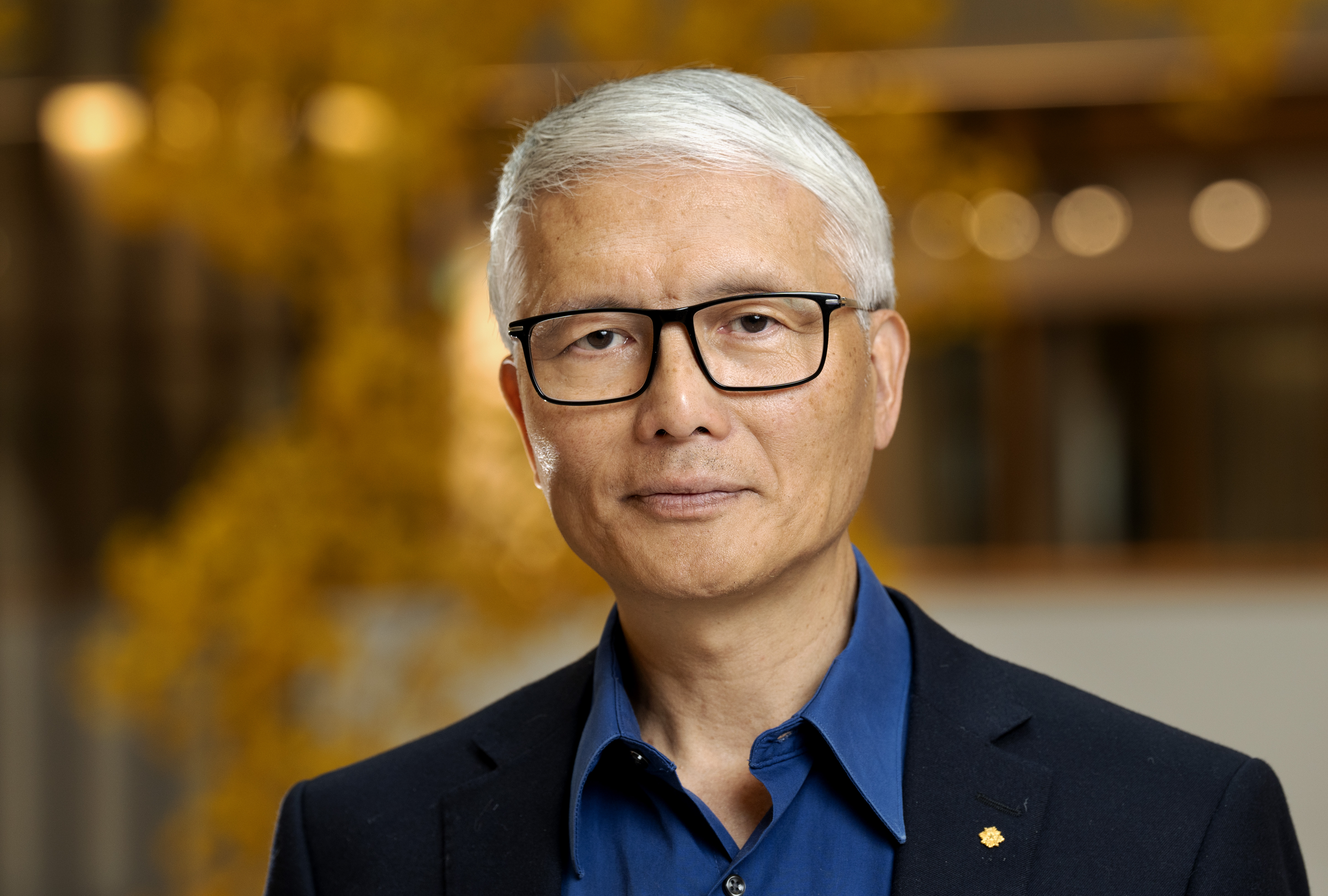
Speaker:Seok-Woo Son/Professor, Seoul National University
School of Earth and Environmental Sciences, Seoul National University, Republic of Korea
Biography:
Prof. Son is a professor of atmospheric sciences at Seoul National University in the Republic of Korea. After receiving his Ph.D. from Pennsylvania State University in 2006, followed by postdoctoral work at Columbia University, USA, he started his academic career at McGill University, Canada, in 2008. During four years of teaching and research at McGill University, he held the Canada Research Chair II, which was awarded by Government of Canada to recognize exceptional foreign climate scientists. In 2012, he returned to Korea as an assistant professor of atmospheric sciences, and was subsequently promoted to associate and full professor. He has published over 200 papers in SCI(E) journals, with over 11,000 citations according to Scopus citation, on a range of topics in atmospheric and climate dynamics.
Prof. Son has been actively involved in international scientific activities. One of his long-term commitments is the APARC (Atmospheric Processes And their Role in Climate) which is a core project of the WCRP (World Climate Research Programme). He joined the APARC SSG in 2013 and served as a co-chair for the period 2020-2023. He is currently an acting vice president of ICMA (International Commission on Middle Atmosphere) of IAMAS (International Association of Meteorology and Atmospheric Sciences).
Lecture Overview:
The responses of tropical cyclone (TC) in the Western North Pacific (WNP) and midlatitude storm tracks, as well as the associated large-scale atmospheric environment to varying CO2 pathways are investigated using an idealized CO2 removal experiment. In the experiment, CO2 concentration is first increased at a rate of 1% per year until quadrupled and then decreased at the same rate until it reaches the initial level.
Our results show an asymmetric change in WNP TC genesis between CO2 ramp-up and ramp-down periods, showing a significant reduction of TC genesis over the Philippine Sea and landfalling TCs in East Asia at the end of CO2 removal. Such changes are attributed to the development of WNP anticyclonic circulation in association with an El Niño-like delayed response in sea surface temperature during the ramp-down period.
A similar asymmetric change is also found in midlatitude storm tracks. The North Atlantic storm track keeps strengthening from the beginning to the middle of CO2 removal. This differs from the North Pacific storm track, which rapidly strengthens during the ramp-down period at a rate faster than its weakening during the ramp-up period. By contrast, the Southern Hemisphere storm track weakens during the ramp-down period at a rate much faster than its strengthening in the warming period. Compared with the present climate, the Northern Hemisphere storm track becomes stronger and the Southern Hemisphere storm track becomes weaker at the end of CO2 removal. These hemispherically asymmetric responses of storm tracks are attributable to the weakened Atlantic meridional overturning circulation and the delayed cooling of the Southern Ocean.
The key findings of this study – that the frequency of tropical and midlatitude cyclones responds asymmetrically to a symmetric CO2 pathway - may provide a reference for regional disaster prevention and preparation under mitigation conditions.
https://www.nature.com/articles/s41612-025-01087-9
https://www.nature.com/articles/s41558-024-01971-x



 Picture News
 Hot News