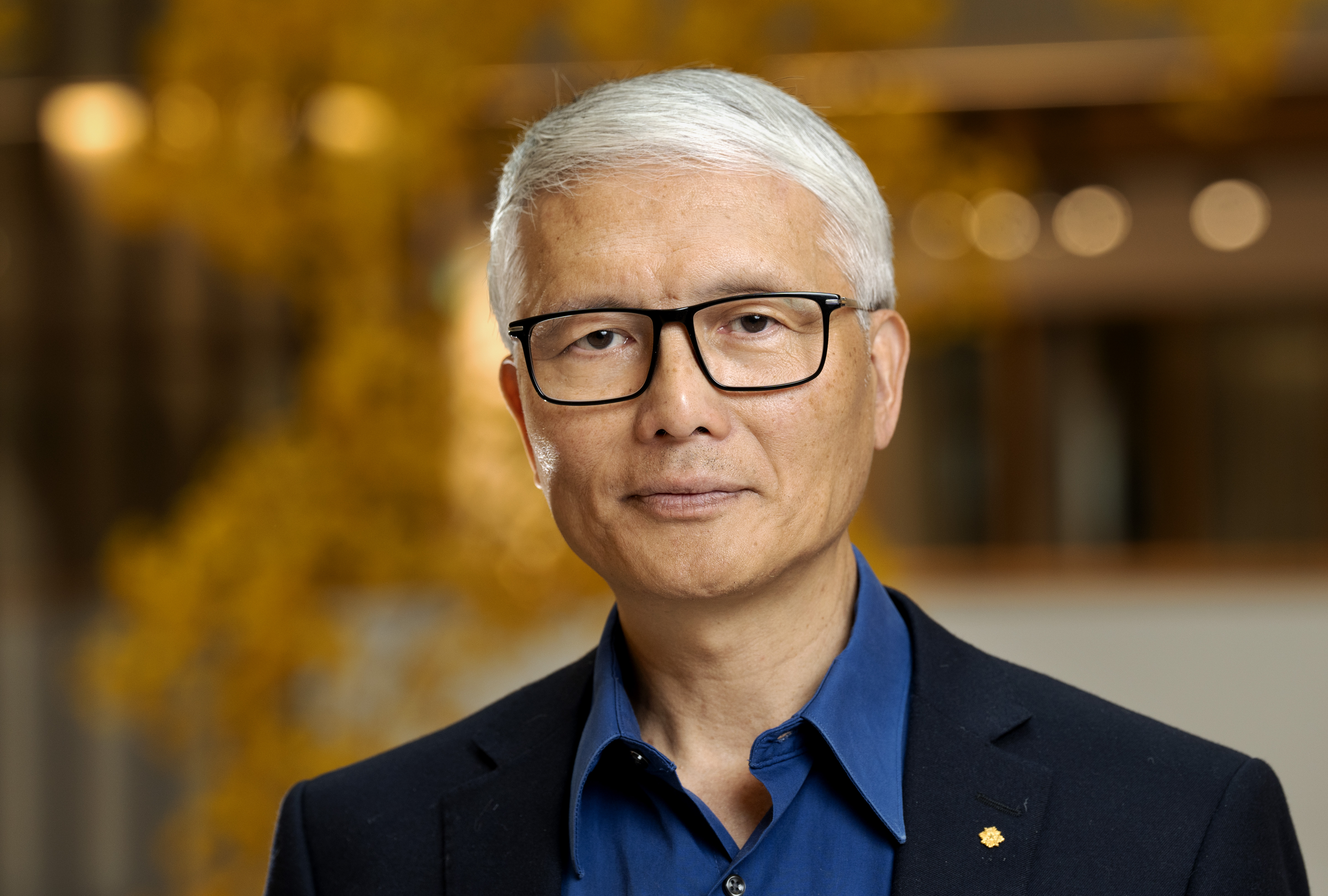
The launching ceremony of the Chinese University Alliance of Earth System Science (CUAESS) was held at Tsinghua University on December 8, 2025. Tsinghua University, Nanjing University, Tianjin University and the Hong Kong University of Science and Technology serve as the founding members of the alliance. Prof. Wu Huaqiang, Vice President of Tsinghua University, and 11 academicians from the Chinese Academy of Sciences (CAS) and the Chinese Academy of Engineering (CAE) attended the ceremony, which was presided over by Prof. Luo Yong, Dean of the Department of Earth System Science (DESS) at Tsinghua University.
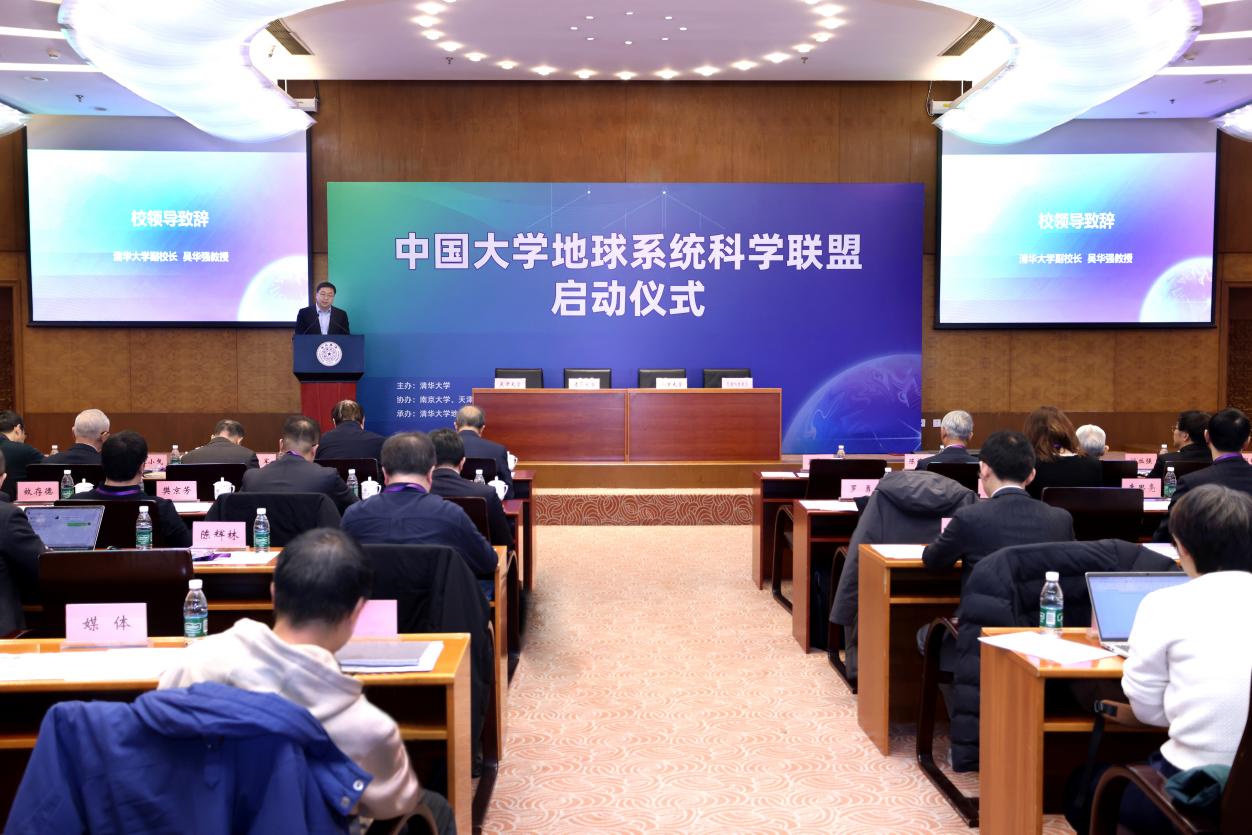
Prof. Wu Huaqiang Delivers a Speech
In his speech, Prof. Wu Huaqiang noted that the inauguration of the Chinese University Alliance of Earth System Science (CUAESS) comes at an opportune time. He expressed the hope that the alliance will develop into a high-level open platform serving national strategies, cultivating high-end talents and leading scientific and technological innovation, and continue to contribute Chinese strength to building a community with a shared future for mankind.
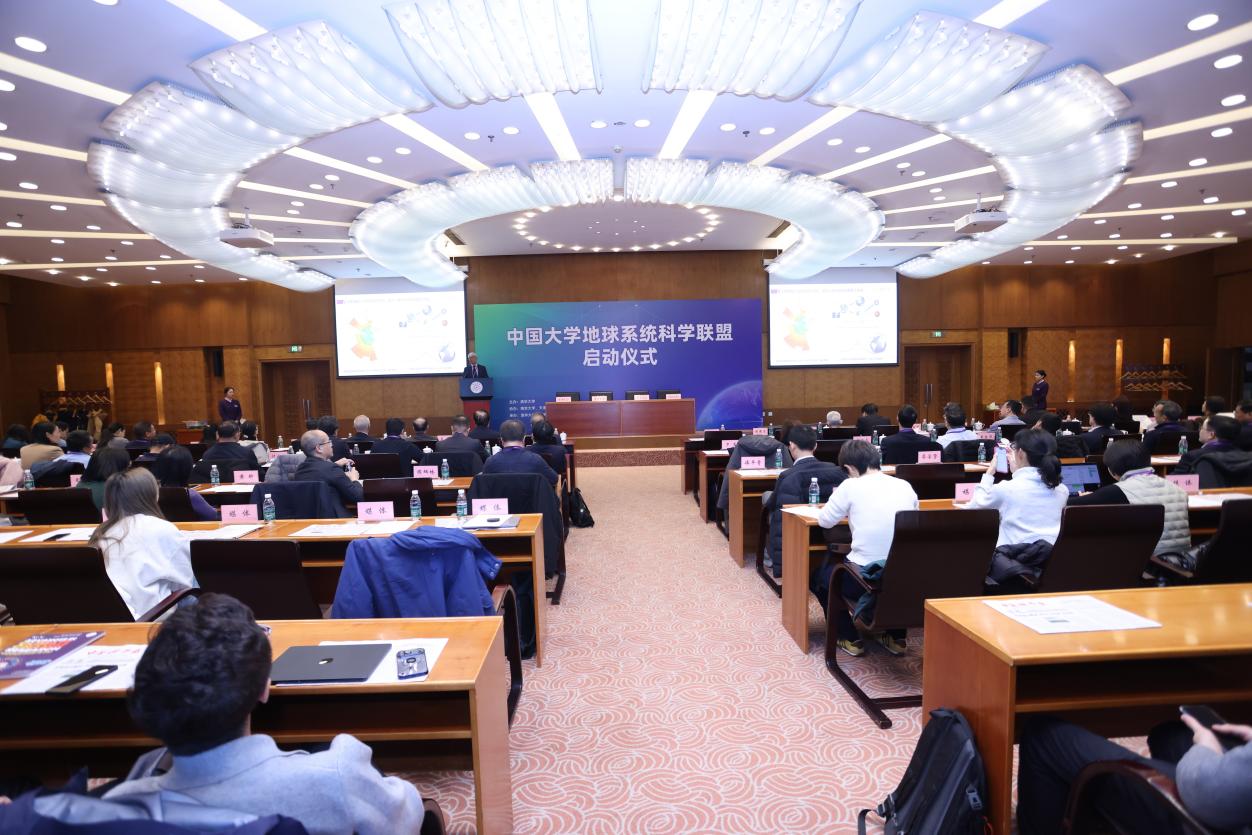
Prof. Chen Deliang Expounds on the Alliance's Establishment Framework
Prof. Chen Deliang, CAS Academician, Distinguished Xinhua Chair Professor at Tsinghua University and the inaugural Chairman of the China University Alliance for Earth System Science (CAUESS), elaborated on the historical background, mission and cooperation model of the alliance. He stated that the Earth is currently experiencing an unprecedented systemic crisis, and the global governance framework is facing numerous challenges. The traditional research paradigm of single discipline and single region is unable to analyze the coupling mechanism of multiple spheres, nor can it provide an integrated solution for the coordinated governance of "climate-biodiversity-resources".
Against this backdrop, the establishment of the China University Alliance for Earth System Science not only reshapes the talent training paradigm, but also provides sustained talent reserves and intellectual support for China's participation in global governance, realizing a fundamental shift from "passive participation" to "proactive leadership". The founding of the alliance marks an important step for Earth system science to move towards a new Earth science featuring "harmony between humans and nature". It will promote interdisciplinary and inter-institutional project cooperation, establish a resource sharing mechanism, and boost the efficient utilization of resources and the exchange and dissemination of academic achievements.
Dr. Wendy Broadgate, Director of the Global Hub of Future Earth, Dr. Hans Joachim Schellnhuber, President of the International Institute for Applied Systems Analysis, and Professor Johan Rockström from the Potsdam Institute for Climate Impact Research delivered video speeches to congratulate the alliance on its establishment. They affirmed the significance and value of the alliance and expressed their expectation for closer cooperation with it.
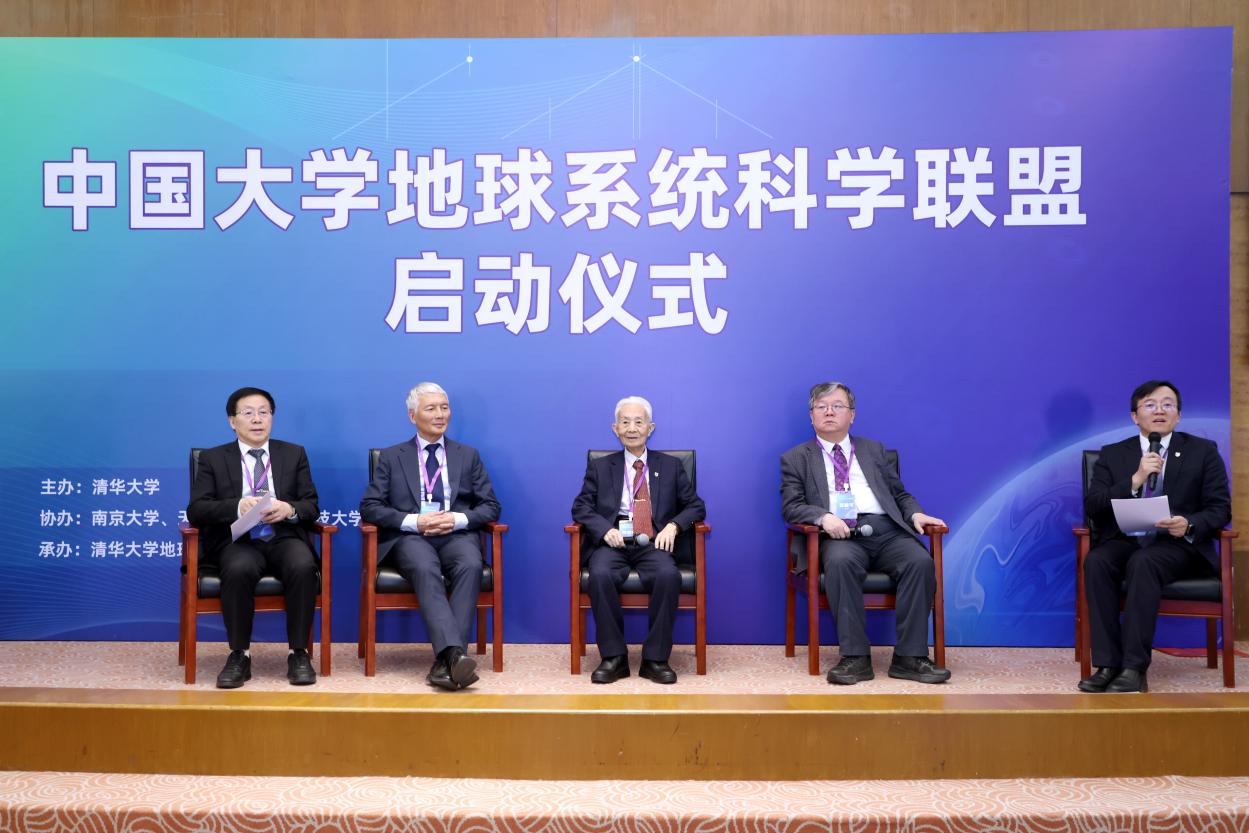
Alliance Members Share Insights in a Panel Discussion
A panel discussion themed "Earth System Science and the Alliance in My Mind" was held, featuring Prof. Chen Deliang (Foreign Academician of CAS, Xinghua Distinguished Chair Professor at Tsinghua University), Prof. Fu Congbin (CAS Academician, Dean of the Institute of Climate and Global Change at Nanjing University) and Prof. Guo Yike (Foreign Academician of CAE, Vice-President for Research and Development at the Hong Kong University of Science and Technology). The discussion was moderated by Prof. Ding Aijun, Assistant President of Nanjing University and Dean of the Nanjing-Helsinki Institute for Atmospheric and Earth System Science.
Prof. Chen Deliang argued that the unique strength of Earth system science lies in its ability to propose systematic solutions to problems. He hoped that the alliance would leverage complex system theory, combine data and models, and address complex issues related to natural science and human activities.
Prof. Fu Congbin recalled his initial engagement with Earth system science and shared his aspirations for the alliance, urging it to strive to deepen the understanding of the laws of the Earth system through interdisciplinary approaches and advanced observation and simulation means, so as to contribute to the sustainable development of human society.
Starting from the original vision of founding the School of Earth System Science at Tianjin University, Prof. Liu Congqiang pointed out that Earth system science is the discipline dedicated to achieving the harmonious coexistence of humans and the Earth. He emphasized that the alliance is not only a cooperation platform, but also an innovation community for in-depth integration, dynamic response and breaking disciplinary barriers, as well as a fertile ground for nurturing new paradigms and leaders in Earth system science and providing new solutions for sustainable development.
In Prof. Guo Yike's view, Earth system science also embodies the concept of "harmony between humans and nature". Looking at future development trends, artificial intelligence will play an important role in Earth system science—it is not only a tool, but also a new social form. He stressed that the development of Earth system science should make full use of artificial intelligence and turn it into an intelligent agent for protecting the Earth. He added that the Hong Kong University of Science and Technology will give full play to its own advantages, act as an international bridge, and contribute to organizing international conferences and expanding the alliance's international influence.
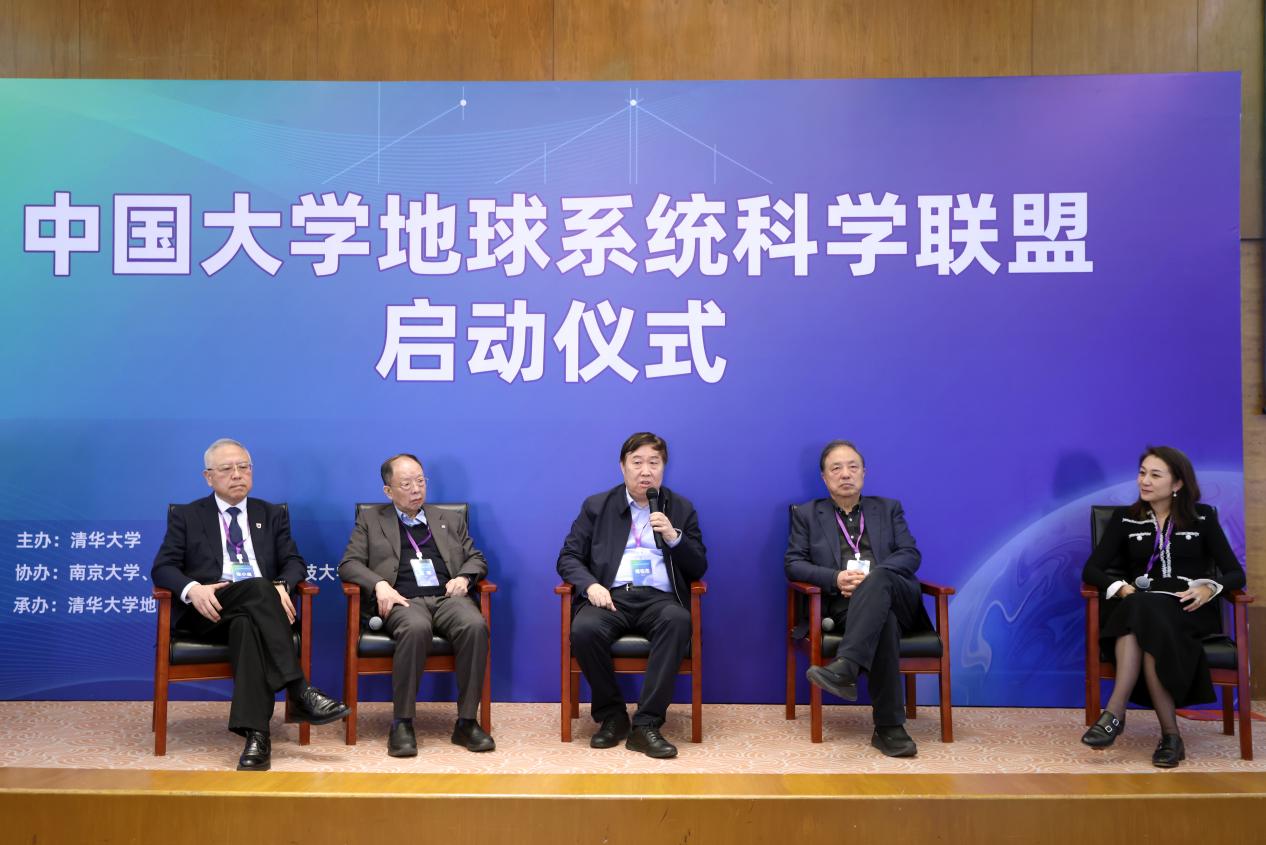
Distinguished Guests Hold a Discussion
A panel discussion on "Opportunities and Challenges for Earth System Science" was conducted with the participation of several renowned academicians: Researcher Qin Dahe (CAS Academician, Former Administrator of the China Meteorological Administration), Researcher Guo Huadong (CAS Academician, Institute of Remote Sensing and Digital Earth, CAS), Researcher Fu Bojie (CAS Academician, Research Center for Eco-Environmental Sciences, CAS), Prof. Xia Jun (CAS Academician, Wuhan University), Researcher Zhang Xiaoye (CAE Academician, Chinese Academy of Meteorological Sciences) and Prof. Huang Jianping (CAS Academician, College of Atmospheric Sciences, Lanzhou University). The discussion was chaired by Prof. Lu Mengxi, Director of the Pan Sutong Institute for Climate Change and Sustainable Development at the Hong Kong University of Science and Technology.
Qin Dahe pointed out that the cryosphere, as one of the five major spheres of the Earth, plays a crucial role in climate system changes. China has distinctive advantages in cryospheric science research and has gained certain international influence. Chinese experts and scholars have held important positions and played a key role in the IPCC Assessment Reports. He hoped that the alliance would play a practical role in promoting the sustainable development of the human-earth system.
Guo Huadong introduced how Digital Earth can support the development of Earth system science. He emphasized the need to study the Earth in a quantitative way, transform Digital Earth into an Earth system simulator, and "put the real Earth into a computer". He expected the alliance to study Earth system science using the concepts and methods of system theory, and advance and lead the development of Earth science in China and the world.
Fu Bojie argued that as an interdisciplinary discipline, Earth system science also needs a core disciplinary foundation. Its development requires applying geographical thinking, adopting the methods of atmospheric science and system science, and constructing the process mechanisms of ecology and economics. He stressed that the development of Earth system science must serve the major strategic needs of the country and provide support for China's sustainable development strategy.
Xia Jun noted that the water cycle is a core link running through multiple spheres of the Earth. In the future, Earth system science will face key scientific issues such as nonlinear spatiotemporal changes, and the integration of biogeochemical processes, hydrological cycle processes of different media and human processes. He encouraged the alliance to apply the holistic thinking of Earth system science, focus on typical case studies in China and around the world, and advance both the development of Earth system science and its applied research for sustainable development from a multi-scale perspective.
Zhang Xiaoye proposed that Chinese scientists are promoting the construction of more realistic emission pathways. He called on the CUAESS to attract more young scientists, drive the development of Earth system science towards a more comprehensive and higher level, aim at the goals of the Paris Agreement, and jointly write a new narrative led by China.
Huang Jianping stated that against the backdrop of severe challenges posed by global climate change, the insufficient simulation accuracy in semi-arid regions has become an important factor restricting the development of Earth system science. To address this problem, it is necessary to promote innovation in observation technologies, deepen the integration of artificial intelligence and high-performance computing, and strengthen interdisciplinary research.
The panel discussion of university representatives was moderated by Prof. Zhu Jialei from the School of Earth System Science at Tianjin University. Experts and scholars from major universities across China, including Beijing Normal University, Zhejiang University and Peking University, introduced the development of Earth system science at their respective institutions.
More than 100 guests attended the launching ceremony, including representatives from the First Division of the New Technology Center of the Ministry of Science and Technology, the Strategic Research and Coordination Division of the Department of Climate Change Response of the Ministry of Ecology and Environment, the National Institute of Natural Disaster Prevention of the Ministry of Emergency Management, the Science and Technology Cooperation Division of the Department of Science and Technology of the China Meteorological Administration, the Fourth Division of the Department of Interdisciplinary Science of the National Natural Science Foundation of China, as well as representatives from peer universities and institutions.



 Picture News
 Hot News